The Complete Women's Tops Edit: A Professional Framework for Building a Refined, Functional and Versatile Clothing Collection
The New Way to Think About Women's Tops
A modern wardrobe should do more than provide clothing for different days. It should make dressing easier, support changing schedules, adapt to different environments and provide enough visual variety to keep everyday outfits interesting. Women's tops are central to that process because they influence the upper proportion of an outfit, frame the face and determine how successfully other garments can be layered around them.
Instead of treating tops as isolated purchases, it is more useful to think of them as components in a wardrobe architecture. A classic T-shirt can establish a casual foundation. A ribbed top can introduce texture. An oversized silhouette can create contemporary volume. A long-sleeve basic can solve a seasonal layering problem. A blouse can elevate a workwear combination, while a satin shirt can provide a more refined option for evening occasions.
This approach changes the way shopping decisions are made. The question is no longer simply whether a top is attractive. The more valuable questions are whether it fits the existing wardrobe, whether it offers a useful silhouette, whether the fabric suits its intended purpose and whether it can produce multiple realistic outfits.
Build the Collection Around Real Life
The most sophisticated wardrobe on paper can become impractical if it does not reflect the owner's actual lifestyle. Before selecting colors, silhouettes or fabrics, identify the environments in which tops are most frequently worn.
Someone with a relaxed daily routine may benefit from a larger selection of cotton T-shirts, casual knits and comfortable ribbed pieces. A professional environment may require more polished blouses, structured tops and garments that work underneath jackets. A person who travels frequently may need lightweight, versatile tops that can be combined repeatedly without demanding complicated maintenance.
Occasion frequency is equally important. If most days are casual, everyday pieces deserve the largest portion of the wardrobe. If social dinners, meetings or formal occasions occur regularly, elevated tops should receive more attention.
This lifestyle-first method prevents a common wardrobe problem: owning beautiful clothing that does not fit into everyday life.
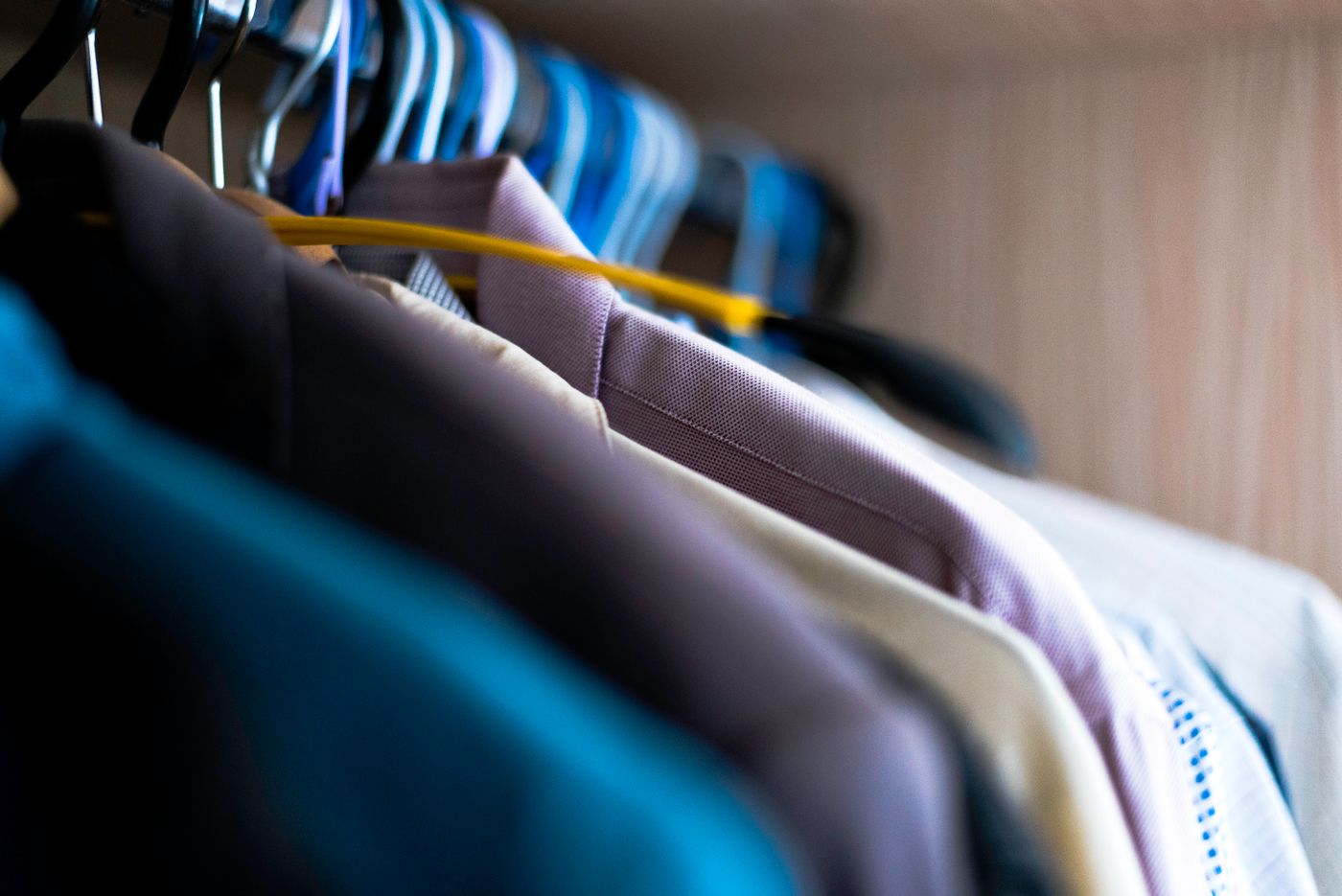
An organized selection of garments demonstrates how different tops can be grouped into a practical wardrobe system.
The Four Dimensions of a Successful Top
A professional evaluation of a top should consider four connected dimensions: physical performance, visual character, wardrobe compatibility and maintenance.
Physical Performance
Consider comfort, movement, stretch, fabric weight, breathability and how the garment behaves during ordinary wear.
Visual Character
Evaluate silhouette, neckline, sleeve shape, texture, color and the level of formality communicated by the garment.
Wardrobe Compatibility
Determine whether the top works with existing trousers, denim, skirts, jackets, footwear and accessories.
Maintenance
Examine washing, drying, ironing, folding and storage requirements before making the purchase.
Frequency of Wear
A useful garment should have realistic opportunities to be worn rather than depending on rare occasions.
Styling Range
The strongest pieces can often shift between different settings through changes in layers, bottoms and accessories.
The Essential Role of Classic Cotton T-Shirts
The classic cotton T-shirt remains one of the most adaptable pieces in women's clothing because its simplicity allows the rest of an outfit to determine the final visual direction.
A white or neutral cotton T-shirt can be worn with denim for relaxed dressing, with tailored trousers for a smart-casual combination, beneath a blazer for additional structure or with a skirt for a softer contrast.
Fabric quality should be evaluated beyond the word “cotton.” The weight of the jersey, surface texture, neckline construction, stitching and recovery after washing all affect how the garment performs.
A dependable classic cotton T-shirt is therefore more than a casual basic. It can become the central building block around which a much larger styling system is constructed.
Understanding Cotton Weight and Drape
Fabric weight changes the way a cotton top behaves. Lightweight jersey can create a softer and more fluid silhouette, while medium-weight cotton often provides a stronger outline. Heavier cotton may create a more substantial casual appearance.
None of these characteristics is automatically better. The appropriate weight depends on climate, desired silhouette and intended layering.
Lightweight cotton can be especially useful underneath jackets because it minimizes bulk. Medium-weight fabric can work effectively as a standalone T-shirt. Heavier cotton may be particularly appropriate for oversized casual designs where structure is part of the aesthetic.
Ribbed Tops as a Texture Strategy
Texture allows a wardrobe to remain visually interesting even when the color palette is restrained. Ribbed tops are especially useful because the surface structure creates dimension without requiring prints or elaborate embellishments.
Fine ribbing can appear understated and refined, while wider ribbing may create a more casual and graphic impression. Stretch recovery is particularly important because ribbed fabrics often follow the body's movement more closely.
For a balanced outfit, pair a textured top with smoother pieces. Tailored trousers, straight denim and simple skirts can all create useful contrast.
A ribbed short-sleeve top can therefore fill a useful gap between completely plain basics and more elaborate statement garments.
How Ribbing Changes the Visual Effect
Vertical ribbing can emphasize directional lines, while horizontal structures may create a broader visual impression. The density of the rib also affects the overall character.
When choosing ribbed garments, consider the relationship between the texture and the intended silhouette. A close-fitting ribbed top can create a streamlined foundation beneath a jacket, while a relaxed ribbed design can function as a standalone casual garment.
Texture also interacts with color. A neutral ribbed top can look significantly different from a smooth neutral T-shirt even when both garments share almost exactly the same shade.
Oversized Tops and Contemporary Proportion
Oversized silhouettes remain valuable because they provide comfort and create a distinctly relaxed visual language. The challenge is ensuring that the extra volume looks deliberate.
One effective strategy is contrast. A loose top can be balanced by straight or narrower trousers. A large shirt can work with a more defined skirt. Another approach is to embrace volume throughout the outfit but introduce structure through footwear, accessories or outerwear.
Length is critical. A slightly oversized top ending around the hip may be easy to balance, while an extra-long silhouette may require more careful consideration of the bottom.
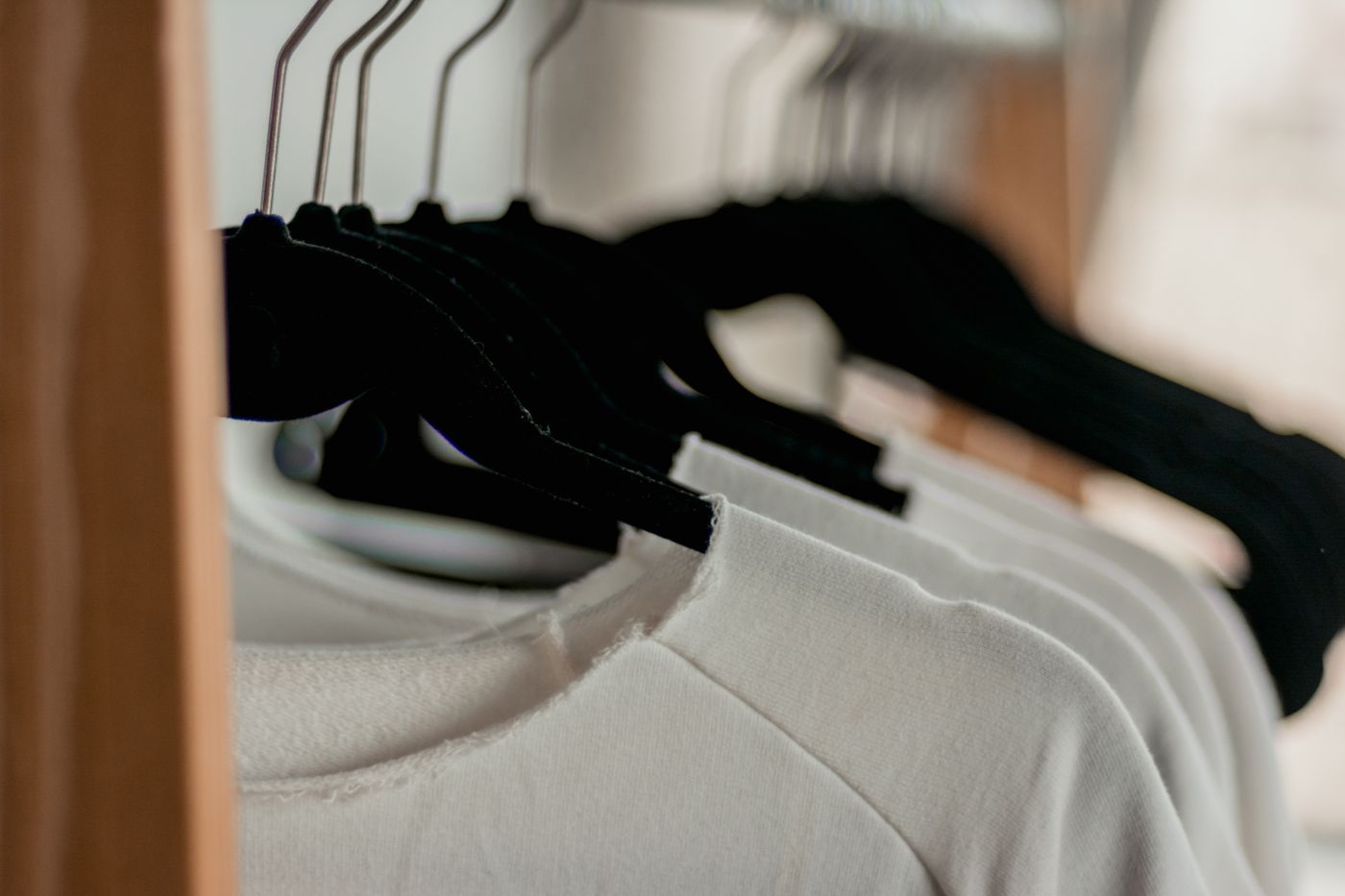
A minimalist arrangement of shirts illustrates how silhouette and spacing can influence the presentation of a wardrobe.
An oversized crew neck top can be especially effective for relaxed outfits when its volume is balanced with the rest of the look.
Long-Sleeve Basics for Transitional Dressing
Long-sleeve tops are often underestimated because they look simple, but their ability to work across changing temperatures makes them extremely valuable.
A lightweight long-sleeve top can be worn independently during mild weather and beneath a jacket or cardigan when temperatures fall. This gives the garment a much wider practical range than a piece designed exclusively for one season.
When choosing one, consider sleeve thickness, neckline, stretch and length. A slim silhouette is generally easier to layer, while a heavier version can act as a standalone top.
A long-sleeve basic top can therefore become one of the most reliable transition garments in a compact wardrobe.
The Technical Importance of Necklines
Necklines influence the entire visual structure of a top. They frame the face, affect how necklaces sit and determine how a garment interacts with jackets and collars.
Crew necks create a familiar and classic appearance. V-necks introduce a more open vertical line. Higher necklines can create a modern, clean effect, while open or softer necklines may feel more relaxed.
The correct choice depends on comfort and styling objectives rather than a single universal rule. Think of the neckline as one of several design tools available when creating an outfit.
A V-neck blouse can be especially useful when the wardrobe requires a polished top that works with tailored bottoms and layered jackets.
Blouses: The Bridge Between Casual and Formal
Blouses offer a wide range of possibilities because they can include woven fabrics, fluid draping, buttons, collars, cuffs and subtle structural details.
A polished blouse does not need to be heavily decorated. Clean construction, attractive fabric behavior and a well-designed neckline can provide enough sophistication.
For office dressing, look for garments that remain comfortable while sitting and moving. Buttons should not pull excessively, shoulders should sit correctly and sleeves should provide enough freedom of movement.
For casual styling, pair a blouse with denim or relaxed trousers. This creates a useful contrast between refined fabric and informal bottoms.
Satin Button-Ups and Evening Versatility
Satin introduces a smooth surface and noticeable light reflection, making it useful when an outfit needs additional sophistication.
A satin button-up can work with tailored trousers for an elegant combination, denim for a relaxed interpretation or a skirt for evening dressing. This versatility is what makes the fabric useful rather than merely decorative.
Because satin already has visual presence, accessories can remain relatively restrained. A simple necklace, small earrings or a structured bag may be enough to complete the outfit.
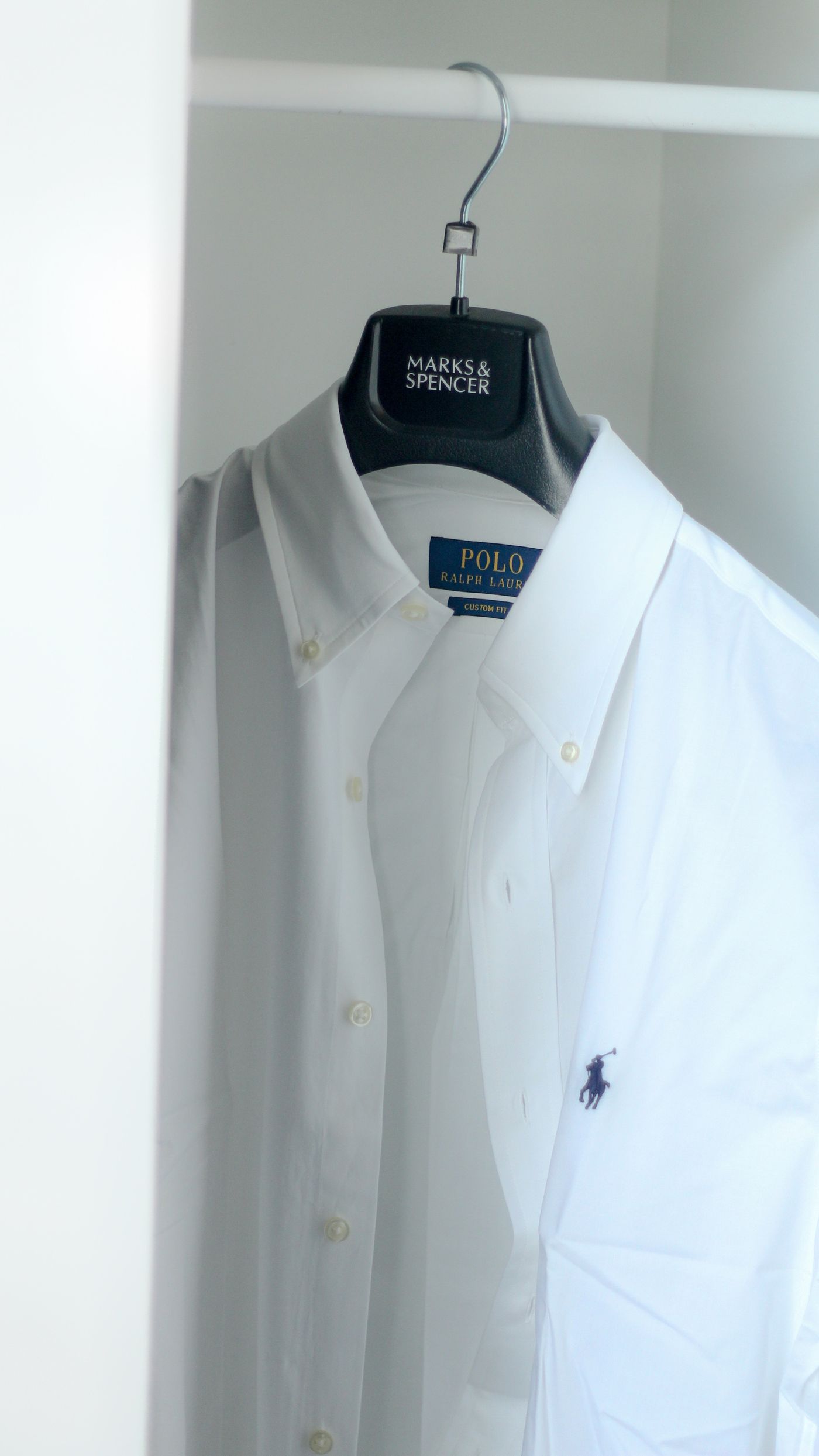
A clean shirt display demonstrates the polished visual potential of structured and refined tops.
A satin button-up blouse can provide an elevated option without requiring an entirely separate evening wardrobe.
Color Planning: Build Relationships, Not Random Choices
A coherent color palette makes a wardrobe easier to use. The objective is not to restrict every garment to a narrow set of shades, but to establish relationships between colors.
Begin by identifying the colors already present in trousers, skirts, jackets and shoes. Then select tops that can interact naturally with those pieces.
White, cream, black, gray, navy, beige and taupe can provide a broad base for everyday combinations.
Burgundy, muted green, soft blue, dusty rose, terracotta and similar shades can add personality without overwhelming the wardrobe.
Color repetition can also create cohesion. A muted accent on a top can be echoed by a bag, shoe, scarf or small accessory. This makes the outfit feel connected without requiring exact matching.
How Many Neutral Tops Are Actually Useful?
The answer depends on how frequently each category is worn. Someone who relies heavily on casual clothing may need several neutral T-shirts. Someone working in a formal environment may benefit more from neutral blouses.
Rather than counting colors alone, count functions. Two white tops are not necessarily duplicates if one is a relaxed cotton T-shirt and the other is a polished blouse.
Function-based organization prevents unnecessary duplication while still allowing multiple garments in the same color family.
Proportion: The Hidden Language of Styling
Proportion is one of the most important factors in outfit design. The relationship between the width and length of the top and the shape of the bottom determines much of the visual balance.
A fitted top can provide contrast against wide-leg trousers. A loose top can create balance with a straight skirt. A cropped silhouette can work with high-rise bottoms, while a longer top may work better with narrower bottoms.
There are no universal formulas that apply to every wardrobe, but understanding proportion allows styling decisions to become more intentional.
Layering With Precision
Layering can multiply the usefulness of a wardrobe, but successful layering requires planning. Start with the thinnest or closest-fitting layer and gradually increase volume toward the outside.
A slim long-sleeve top can sit comfortably beneath a blazer. A lightweight blouse can work beneath a structured jacket. An oversized top may be better used as the outermost casual layer rather than underneath another fitted garment.
Necklines should also complement each other. A high neckline beneath a closed collar can create a crowded effect, while an open neckline can provide more visual space.
Smart-Casual Workwear
Smart-casual workwear often depends on the relationship between a refined top and a more relaxed supporting piece.
A blouse can be combined with denim where appropriate, while a simple cotton T-shirt can become more polished beneath a blazer and with tailored trousers. Ribbed tops can also work when their construction and styling are sufficiently refined for the environment.
The objective is balance. If the top is very casual, introduce structure elsewhere. If the top is highly polished, a more relaxed bottom may create a contemporary interpretation.
For broader wardrobe coordination, the women's clothing collection can serve as a useful reference when considering how tops relate to other categories.
Casual Dressing With Deliberate Structure
Casual dressing becomes more sophisticated when at least one element provides definition. This could be the fit of the top, the structure of the trousers, the shape of the footwear or the design of a bag.
A plain T-shirt with straight denim and clean footwear can look intentional without requiring complicated styling. An oversized top can become more balanced with a structured bag or defined shoe.
The goal is not to make casual clothing formal. It is to make comfort and visual intention coexist.
Travel Wardrobes Built Around Tops
Travel exposes the strengths and weaknesses of a wardrobe quickly. Clothing must coordinate, pack efficiently, remain comfortable and tolerate repeated use.
For this reason, tops with broad styling potential are particularly valuable. A neutral T-shirt can be worn with several bottoms. A lightweight long-sleeve can serve both as a standalone garment and a layer. A blouse can provide a more polished option without requiring a separate formal outfit.
Fabric care is also critical. Tops that wrinkle easily or require specialized treatment may become inconvenient during travel.
A practical travel selection should therefore prioritize versatility and realistic maintenance rather than simply visual novelty.
Wardrobe Organization by Function
Organizing tops according to color can be useful, but organizing them according to function often makes dressing even easier.
One section can contain everyday basics, another can hold workwear blouses, another can contain long-sleeve layers and another can be reserved for elevated pieces.
This system makes gaps easier to identify. If the everyday category is crowded but the polished category contains only one garment, the next shopping priority becomes obvious.
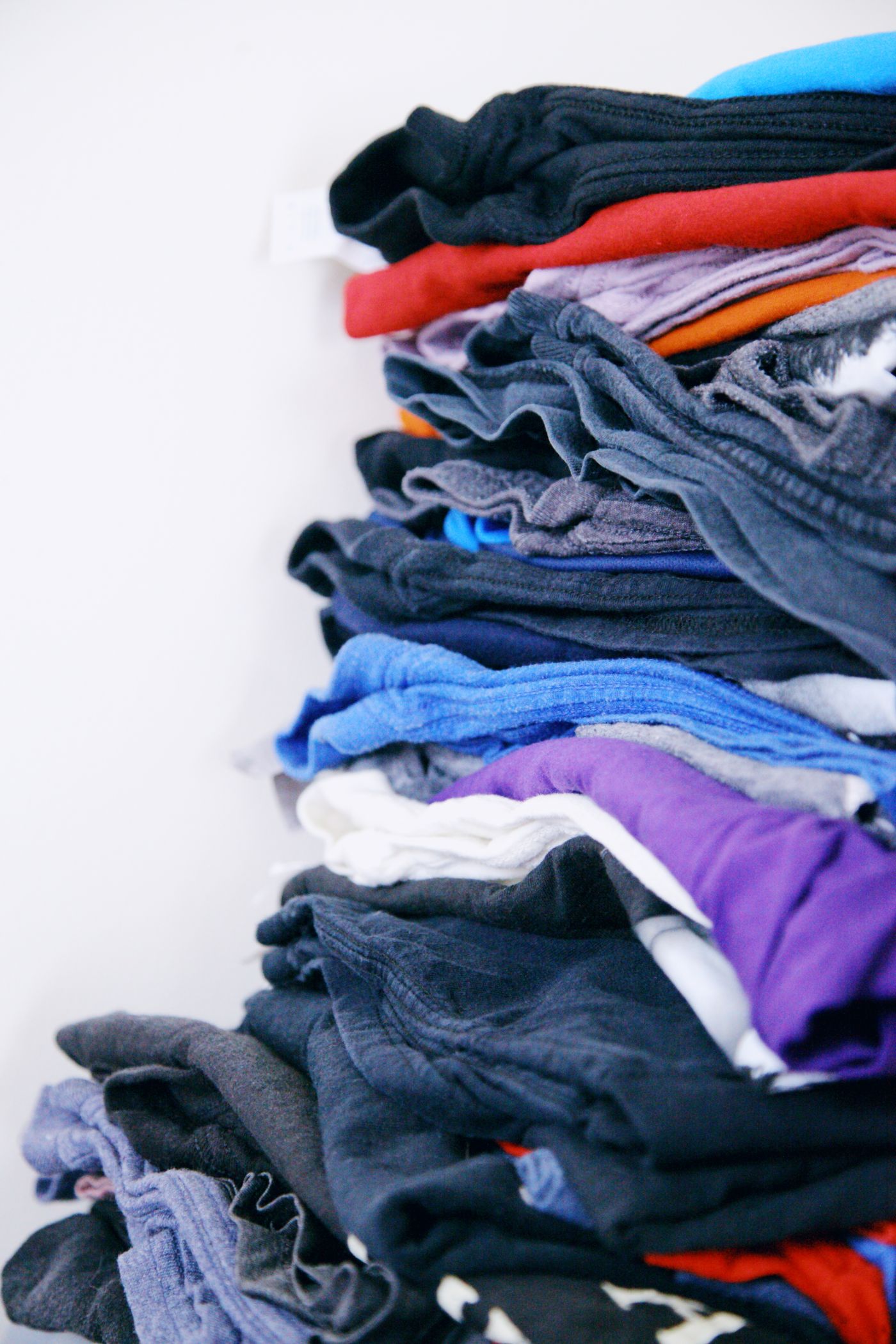
Neatly folded garments demonstrate how organization can make a wardrobe easier to evaluate and maintain.
Folding, Hanging and Storage
Different tops benefit from different storage methods. Structured woven garments can often be hung on suitable hangers, while heavier knits may be better folded to reduce stress on the shoulders.
Overcrowding should be avoided because compressed garments can become difficult to access and may wrinkle unnecessarily.
Storage should also allow enough visibility to identify available options. A wardrobe that technically contains many useful tops can still feel limited if the garments are difficult to see or retrieve.
Fabric Care as Part of Wardrobe Strategy
Care requirements should be considered before purchasing rather than after the garment becomes difficult to maintain.
Cotton, stretch fabrics, satin and woven blouses can have very different requirements. Always consult the garment's care instructions.
Excessive heat can affect certain fibers and finishes, while aggressive washing may accelerate surface wear. Proper drying and storage can also help preserve shape.
A garment that is easy to care for is more likely to become part of a frequent rotation.
Fit Testing Before Making a Purchase
Fit should be evaluated through movement rather than standing still. Raise the arms, rotate the shoulders, sit down and walk naturally.
Check the shoulder seam, sleeve length, neckline and hem. A top that looks attractive in a static position but restricts movement may become uncomfortable after several hours.
For oversized pieces, confirm that the volume is intentional. For fitted garments, check whether stretch remains comfortable rather than restrictive.
Shopping Online With Professional Criteria
Online shopping requires more attention to measurements and product specifications because physical inspection is unavailable.
Do not rely only on size labels. Compare garment measurements whenever they are provided. If a favorite top already fits well, measure it and use those dimensions as a reference.
Read the fabric composition carefully. Terms such as “soft,” “relaxed” or “premium” describe marketing positioning but do not replace measurable information about composition and construction.
When comparing different silhouettes, consider whether the new garment actually expands the wardrobe. A second version of an existing favorite may be useful, but it should be purchased because the additional piece serves a real purpose.
For example, a relaxed oversized silhouette can fill a different function from a fitted ribbed top, even if both are casual.
The Three-Tier Wardrobe System
A professional wardrobe can be organized into three levels: foundation, support and accent.
Foundation
These are the pieces worn most frequently: classic cotton T-shirts, neutral basics and reliable long-sleeve layers.
Support
These garments expand the styling range through texture, proportion and additional colors, such as ribbed and oversized tops.
Accent
These pieces provide elevated fabrics, distinctive colors or special details for situations where more visual interest is required.
How to Use a Small Collection More Effectively
A small wardrobe can feel surprisingly large when garments have complementary functions. The trick is to maximize combinations rather than the number of individual pieces.
One cotton T-shirt can work with denim, trousers, a skirt, a cardigan and a blazer. One blouse can work with tailored trousers, jeans, a skirt and a jacket. One ribbed top can move between casual and polished combinations.
This is the essence of wardrobe efficiency: each piece contributes to several complete outfits.
Creating a Weekly Outfit Rotation
Planning a weekly rotation is a useful way to test wardrobe performance. Select several tops at the beginning of the week and assign each to a different type of outfit.
For example, use a cotton T-shirt for casual dressing, a ribbed top for a social day, a long-sleeve basic for transitional weather, a blouse for professional dressing and a satin top for an evening occasion.
Then vary the bottoms and accessories. The resulting combinations reveal how much versatility exists within the collection.
When a Top Is Worth Buying
A top generally deserves serious consideration when it solves a specific problem or expands the number of useful outfits.
Ask whether it fills a missing category, offers a different silhouette, introduces a useful fabric or provides a color that coordinates with multiple existing pieces.
Frequency of wear should also be considered. A garment that can realistically be worn every week may have considerably more practical value than one that only works for a very narrow occasion.
When a Top Is Probably Redundant
Redundancy is not always bad. Owning multiple versions of a favorite basic can be practical if the garment is worn frequently.
However, redundancy becomes inefficient when several garments perform the same function and are rarely worn. If five nearly identical tops compete for the same occasions, adding a sixth may not improve the wardrobe.
A better purchase might be a different neckline, fabric, sleeve length or level of formality.
Creating Visual Variety Without Excess
Visual variety can come from four primary sources: color, texture, silhouette and detail.
When the color palette is narrow, texture can provide contrast. When colors are neutral, silhouette can create interest. When silhouettes are consistent, a distinctive fabric or neckline can add personality.
This approach allows a wardrobe to remain cohesive without becoming monotonous.
Using Accessories to Transform Tops
Accessories can dramatically change the perceived role of a top. A simple cotton T-shirt can become more polished with a structured bag and tailored trousers. A blouse can become casual with denim and simple footwear.
Jewelry should also relate to the neckline. Crew necks can support necklaces that sit above or below the neckline depending on the desired effect. Open necklines provide more visual space.
Scarves, belts, bags and footwear can all introduce color repetition and strengthen the relationship between individual pieces.
Professional Tops for Different Dress Codes
Different environments call for different levels of polish. A casual setting can accommodate relaxed cotton and oversized silhouettes. A smart-casual environment may benefit from polished basics, blouses and refined knits. More formal situations generally require cleaner construction and more elevated materials.
The important point is that dress codes are contextual. The same blouse may look casual with denim and more formal with tailored trousers and refined footwear.
The Role of the White Top
White is often considered a wardrobe essential because it can function as a neutral foundation. However, not every white top performs the same role.
A white cotton T-shirt creates a casual foundation. A white blouse can look polished. A white satin shirt can become an evening piece. A white ribbed top introduces texture.
This demonstrates why wardrobe planning should focus on function rather than color alone.
The Role of Dark Neutral Tops
Black, navy and charcoal tops can create strong foundations for professional and evening dressing. They can also provide contrast against lighter bottoms.
Dark neutrals are especially useful when the wardrobe contains lighter outerwear or colorful accessories. They create a stable visual base while allowing other elements to stand out.
Building a Balanced Tops Collection
A balanced collection should contain different levels of formality, different silhouettes and enough color variation to prevent repetition.
Comfortable cotton or jersey pieces for regular use, errands, weekends and relaxed activities.
Blouses and refined tops for work, meetings, dinners and smart-casual occasions.
Ribbed, woven or subtly structured garments that add visual depth.
Distinctive colors, elevated fabrics or unusual silhouettes that provide personality.
Professional Specification Table
| Top Type | Primary Purpose | Recommended Fabric Direction | Best Pairings | Layering Potential |
|---|---|---|---|---|
| Classic Cotton T-Shirt | Daily foundation | Cotton jersey and cotton blends | Denim, trousers, skirts | Excellent |
| Ribbed Short-Sleeve Top | Textured everyday option | Ribbed cotton and stretch blends | Tailored trousers, denim, skirts | Very Good |
| Oversized Crew Neck | Relaxed contemporary dressing | Soft cotton jersey | Straight trousers, denim, casual skirts | Moderate |
| Long-Sleeve Basic | Transition and layering | Fine jersey and lightweight blends | Jackets, cardigans, dresses | Excellent |
| V-Neck Blouse | Polished and professional dressing | Fluid woven fabrics | Tailored trousers, skirts, denim | Excellent |
| Satin Button-Up | Elevated and evening styling | Satin and fluid woven fabrics | Trousers, skirts, denim | Good |
How to Create More Value From Existing Tops
Before buying anything new, experiment with garments already owned. Change the tuck, switch the bottom, add a jacket or introduce a different accessory.
A top that has always been worn with denim may take on a completely different appearance with tailored trousers. A blouse that has always been considered workwear may become suitable for dinner with a different skirt and accessories.
This process can reveal hidden versatility and reduce unnecessary shopping.
Refreshing a Wardrobe Through Small Changes
Sometimes the wardrobe does not need new garments; it needs new combinations. Changing the order of layers can alter the appearance of familiar pieces.
Try wearing a long-sleeve top beneath a sleeveless garment, a blouse underneath a structured jacket or an oversized top with a more defined bottom.
Color combinations can also be refreshed. A neutral top can be paired with a different accent color, while a colorful top can be grounded with a neutral bottom.
Travel-Friendly Top Selection
For travel, prioritize garments that can perform multiple functions. A top that works alone, under a jacket and with several bottoms is particularly valuable.
Neutral colors make packing easier because they increase the number of possible combinations. Lightweight materials can also reduce bulk.
For longer trips, consider drying time, wrinkle behavior and how easily each garment can be refreshed between wears.
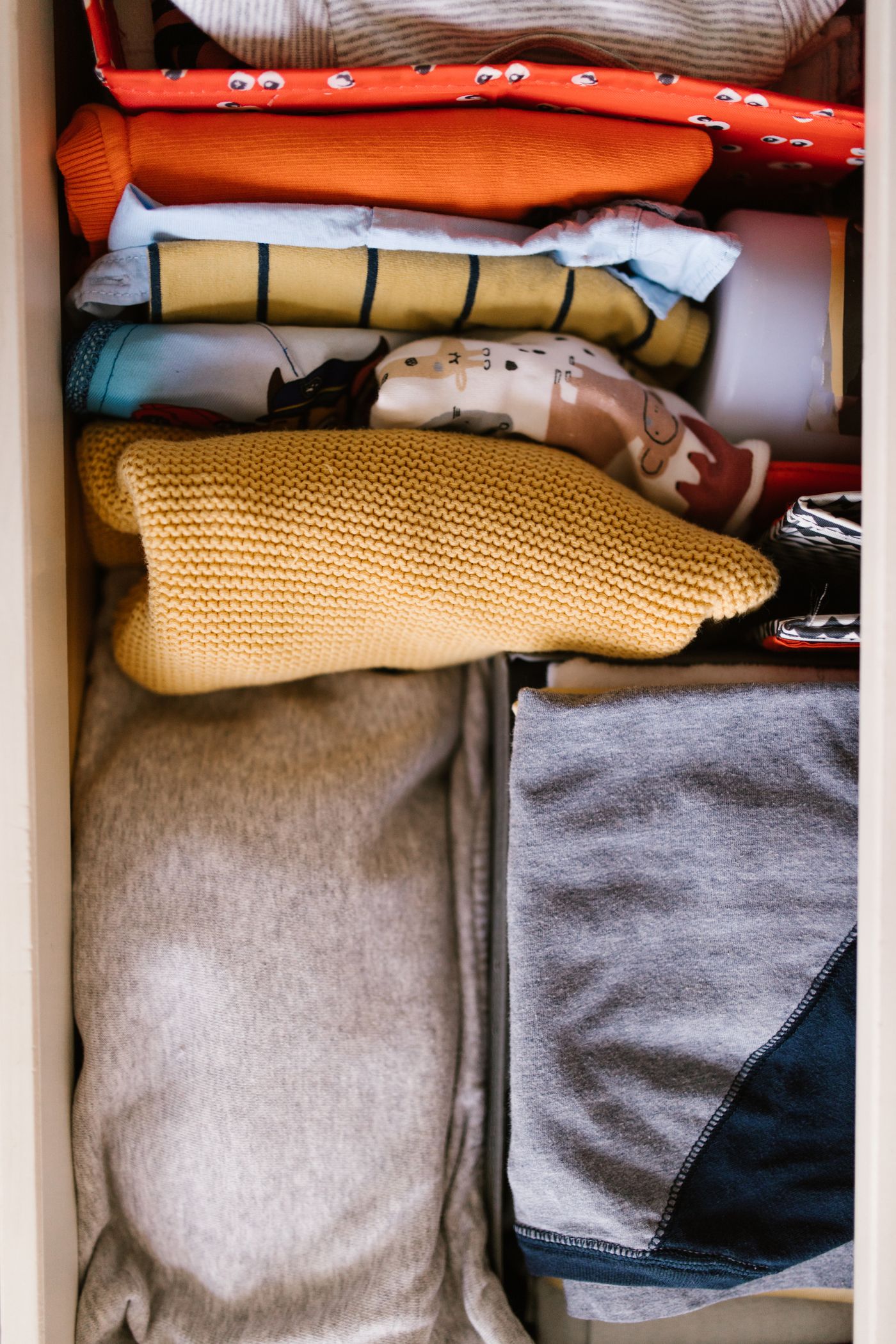
Neatly organized folded garments illustrate the practical side of building a compact and efficient wardrobe.
The Importance of Garment Condition
Even a high-quality top can lose its polished appearance when the garment is worn, stretched or poorly maintained.
Check necklines for distortion, seams for loose threads, fabric surfaces for excessive pilling and hems for irregularity. Regular wardrobe inspection helps identify small maintenance issues before they become permanent.
Keeping garments in good condition also increases the value of basic pieces. A simple top with excellent fit and condition can remain useful for a long time.
How to Edit the Collection Seasonally
Seasonal editing does not necessarily mean removing half the wardrobe. Instead, move the most seasonally relevant pieces into the easiest-to-access locations.
Warm-weather tops can become more visible during hotter months, while long sleeves and heavier fabrics can be prioritized during cooler periods.
Use seasonal changes as opportunities to inspect garments, identify repairs and create a short shopping list based on genuine gaps.
Creating a Premium Appearance Through Simplicity
A premium-looking outfit is often built from simple pieces rather than excessive decoration. Clean proportions, consistent colors, good fabric condition and controlled accessories can create a refined effect.
This is particularly relevant to women's tops because the upper part of the outfit is often highly visible. A well-fitting neutral top can look remarkably polished when paired with carefully selected trousers, footwear and accessories.
The principle is simple: refinement often comes from editing rather than adding.
Choosing Tops for Different Personal Styles
A practical tops collection can support many aesthetics. Minimal wardrobes may emphasize clean cotton basics, neutral colors and simple silhouettes. Romantic wardrobes may include softer fabrics and delicate details. Contemporary wardrobes may rely on oversized proportions and strong shapes.
The key is consistency. Personal style becomes easier to express when the tops collection reflects the wearer's preferred visual language rather than constantly switching between unrelated trends.
Building Around a Signature Silhouette
Many wardrobes become easier to manage when one or two silhouettes are recognized as personal favorites.
Someone may prefer relaxed crew necks, while another person may feel most comfortable in fitted ribbed tops. Another wardrobe may revolve around polished V-neck blouses.
Once a signature silhouette is identified, supporting garments can be selected around it. This does not mean wearing the same shape every day. It simply creates a consistent foundation.
How Tops Influence the Perceived Formality of an Outfit
The top often determines how casual or refined an outfit feels. Cotton jersey usually communicates informality, while woven blouses and satin can create a more elevated impression.
However, context changes everything. A cotton T-shirt beneath a tailored blazer can look polished, while a satin blouse with relaxed denim can become surprisingly casual.
This flexibility is why wardrobe styling should consider complete combinations rather than judging garments independently.
A Practical Shopping Decision Framework
Before purchasing a top, evaluate it through a simple sequence.
- What specific wardrobe problem does this top solve?
- Which existing bottoms can be worn with it?
- Can it be layered with current jackets or cardigans?
- Does the color work with existing accessories?
- Does the fabric suit the climate?
- Is the fit appropriate for the intended silhouette?
- Are the care requirements realistic?
- Can it be worn frequently enough to justify its place?
If the answers are strong across most categories, the garment has a clearer role within the wardrobe.
Common Mistakes When Buying Women's Tops
One common mistake is buying too many versions of the same silhouette. Another is choosing colors without considering existing bottoms. A third is purchasing special-occasion garments without enough everyday foundations.
Ignoring fabric behavior is another problem. A top can look beautiful but become uncomfortable, transparent, restrictive or difficult to maintain.
Finally, buying according to trend alone can create a wardrobe that changes constantly without developing a reliable core.
Using a Wardrobe Gap List
A gap list is one of the simplest tools for controlling future purchases. Write down missing functions rather than specific products.
Instead of writing “buy a new top,” write “need one polished blouse for professional outfits” or “need a lightweight neutral layer for transitional weather.”
This transforms shopping from an emotional activity into a targeted wardrobe-building process.
When a genuine gap involves everyday basics, a classic cotton option may solve a different problem from a polished blouse or an elevated evening top.
Creating a Compact but Complete Top Collection
A compact collection does not need to feel restrictive. The goal is to make every garment useful.
A strong collection can contain everyday cotton pieces, one or two textured tops, a relaxed oversized silhouette, a long-sleeve basic, a polished blouse and an elevated fabric option.
The number can increase according to lifestyle, but the structure should remain intentional.
How to Balance Comfort and Elegance
Comfort and elegance are not opposing concepts. The most successful everyday garments often combine both.
A soft fabric can still have a clean silhouette. An oversized top can still look intentional. A cotton T-shirt can become polished through proportion and styling.
The key is to distinguish between physical comfort and visual looseness. A comfortable garment does not have to look careless.
Long-Term Wardrobe Planning
A wardrobe should evolve gradually. Seasonal trends can be incorporated through selected accent pieces while the foundation remains stable.
This approach reduces unnecessary replacement and allows the wardrobe to develop a recognizable identity.
Over time, the most useful garments become obvious. These are the pieces that repeatedly appear in outfits, receive frequent wear and work across multiple situations.
The Complete Tops Evaluation Matrix
| Evaluation Area | Questions to Ask | Why It Matters |
|---|---|---|
| Fit | Does the garment sit correctly at the shoulders, body and sleeves? | Determines comfort and visual polish. |
| Fabric | Does the material suit the intended environment? | Influences comfort, drape and durability. |
| Silhouette | Is the shape consistent with the desired styling? | Controls proportion and outfit balance. |
| Color | Does the shade coordinate with existing garments? | Increases the number of useful combinations. |
| Versatility | Can the top work in several realistic outfits? | Improves wardrobe efficiency. |
| Maintenance | Can the garment be cared for easily? | Supports frequent long-term use. |
The Five-Piece Professional Foundation
For someone beginning a wardrobe refresh, five strategic categories can provide a useful foundation: a classic cotton T-shirt, a textured ribbed top, a long-sleeve basic, a polished blouse and an elevated top.
The colors and exact silhouettes can vary, but the categories create functional diversity.
From there, additional garments can be added according to lifestyle. An oversized crew neck may be valuable for relaxed dressing, while another blouse may be necessary for professional environments.
Using Existing Garments as Reference Points
Before purchasing online, choose a few existing garments that fit exceptionally well. Measure them and compare their proportions with new products.
This is particularly useful for sleeve length, body width and overall garment length. It can also help clarify whether a “relaxed” or “oversized” description corresponds to the preferred amount of volume.
Why Wardrobe Editing Is an Ongoing Process
Personal lifestyles change. Work schedules change, climates change, travel patterns change and preferences evolve. A tops collection should therefore be reviewed periodically.
A garment that was essential two years ago may no longer suit the current routine. Conversely, a previously unused blouse may become valuable after a change in professional requirements.
Regular editing keeps the wardrobe aligned with real life.
Final Professional Checklist
- Start with lifestyle and actual wardrobe needs.
- Build a dependable foundation of everyday tops.
- Use ribbed textures to add visual depth.
- Introduce oversized silhouettes intentionally.
- Keep at least one useful long-sleeve layering piece.
- Include a polished blouse for professional or smart-casual situations.
- Consider satin or another elevated fabric for evening versatility.
- Build colors around existing wardrobe relationships.
- Evaluate fabric weight and behavior before buying.
- Check fit through movement rather than appearance alone.
- Consider care requirements as part of the purchase decision.
- Use layering to increase seasonal flexibility.
- Organize garments according to function as well as color.
- Review the wardrobe regularly for genuine gaps.
- Avoid unnecessary duplication.
- Use accessories to refresh familiar tops.
- Test new purchases against multiple existing outfits.
- Prioritize pieces that can realistically be worn often.
Frequently Asked Questions About Women's Tops
What should a women's tops collection include?
A practical collection can include classic cotton T-shirts, textured ribbed tops, long-sleeve basics, one or more polished blouses, a relaxed silhouette and an elevated option for special occasions.
How many tops are enough for a capsule wardrobe?
There is no universal number. The right quantity depends on lifestyle, climate, professional requirements and how often laundry is done. Function is more important than a fixed number.
Why are cotton T-shirts important?
They provide a simple foundation that can be worn alone, layered beneath jackets or combined with many different bottoms.
What is the benefit of ribbed tops?
Ribbed textures create visual interest without requiring complicated patterns or embellishments. They can also provide a useful fitted foundation for layering.
How should oversized tops be balanced?
Use proportion. Pair significant volume with a streamlined or structured element, or intentionally coordinate relaxed proportions throughout the outfit.
Are long-sleeve tops useful all year?
They can be. Lightweight long-sleeve pieces are especially useful for transitional weather and air-conditioned environments, while heavier versions can support cooler seasons.
When should I choose a V-neck blouse?
A V-neck blouse can be useful when a polished top is needed for work, smart-casual outfits or occasions where an open neckline works well with accessories.
Can satin blouses be worn during the day?
Yes. Pairing satin with casual denim, simple footwear and understated accessories can make the garment suitable for less formal settings.
How do I select colors for my tops?
Begin with colors already present in your wardrobe. Establish several dependable neutrals and then introduce accent shades that coordinate naturally with them.
How can I avoid buying duplicate tops?
Define the role of every purchase before buying. If the new garment performs exactly the same function as several existing pieces, consider whether another category would provide greater value.
What makes a top versatile?
A versatile top can work with multiple bottoms, adapt to different layers and function in more than one realistic setting.
How can I make simple tops look expensive?
Focus on fit, condition, proportion, clean color combinations, appropriate accessories and structured supporting garments.
What should I consider when shopping online?
Review measurements, fabric composition, fit descriptions, construction details, care instructions and compatibility with the garments already owned.
How important is fabric weight?
Fabric weight influences drape, opacity, warmth, structure and layering. The ideal weight depends on climate and intended use.
How can I style a basic cotton top differently?
Change the bottom, tuck or partially tuck the top, add a blazer or cardigan, change footwear and use accessories to create a different visual direction.
What makes a blouse suitable for workwear?
A clean silhouette, comfortable construction, appropriate neckline, suitable fabric and a polished overall appearance can make a blouse useful for professional settings.
Should I own multiple versions of the same basic top?
Multiple versions can be practical when the garment is worn frequently. The important factor is whether each additional piece genuinely supports the wardrobe.
How can I improve my wardrobe without buying new clothes?
Experiment with new combinations, layering, accessories, proportions and color pairings. Existing garments often have more styling potential than initially assumed.
How should tops be stored?
Storage depends on the fabric and construction. Many lightweight woven garments can be hung, while heavier knits are often better folded to reduce shoulder stress.
What is the most important quality when buying a top?
There is no single factor for every garment, but fit, comfort, fabric behavior, wardrobe compatibility and realistic frequency of wear are fundamental.
Comments
Post a Comment