The Modern Women's Tops Capsule: A Professional Guide to Building a Versatile, Elegant and High-Value Wardrobe
The Modern Women's Tops Capsule: A Professional Guide to Building a Versatile, Elegant and High-Value Wardrobe
Why Tops Deserve a Strategic Place in Every Wardrobe
A wardrobe can contain beautiful trousers, skirts, denim, jackets and accessories, yet the overall appearance often depends on the top worn closest to the face. Tops influence proportion, visual balance, comfort, layering, color harmony and the level of formality an outfit communicates. For that reason, building a thoughtful collection of women's tops is not simply a matter of buying attractive pieces. It is a process of creating a reliable system in which individual garments work together across multiple occasions.
A practical tops capsule should include different silhouettes, sleeve lengths, necklines, textures and levels of formality. The objective is not to own dozens of nearly identical shirts. Instead, each selected piece should contribute something different. One top might provide effortless everyday comfort, another may create structure beneath a blazer, while another can transform simple trousers into a polished evening look.
The modern approach to wardrobe planning also places greater emphasis on versatility. A well-designed top should ideally work with several existing garments rather than depend on one specific outfit. This makes shopping more intentional, reduces unnecessary duplication and makes dressing faster on busy mornings.
Start With the Role of Each Top
Before considering color or seasonal trends, define what each top is supposed to accomplish. This simple step prevents the common problem of purchasing several attractive pieces that all perform exactly the same function.
Everyday basics should form the foundation. A dependable cotton crew neck, a refined long-sleeve layer and a comfortable ribbed top can cover a remarkable number of casual combinations. For a more polished wardrobe, add a blouse with a clean neckline and a fabric that holds its shape.
Special-occasion pieces serve a different role. Satin, refined draping, distinctive collars or subtle sheen can create a more elevated visual effect. These garments should not necessarily dominate the wardrobe, but they can provide important variety when casual basics feel too simple.
Statement silhouettes are another category. Oversized shapes, dramatic sleeves, unusual textures or strong color can introduce personality. Because statement pieces attract attention, they often work best when paired with quieter bottoms and accessories.
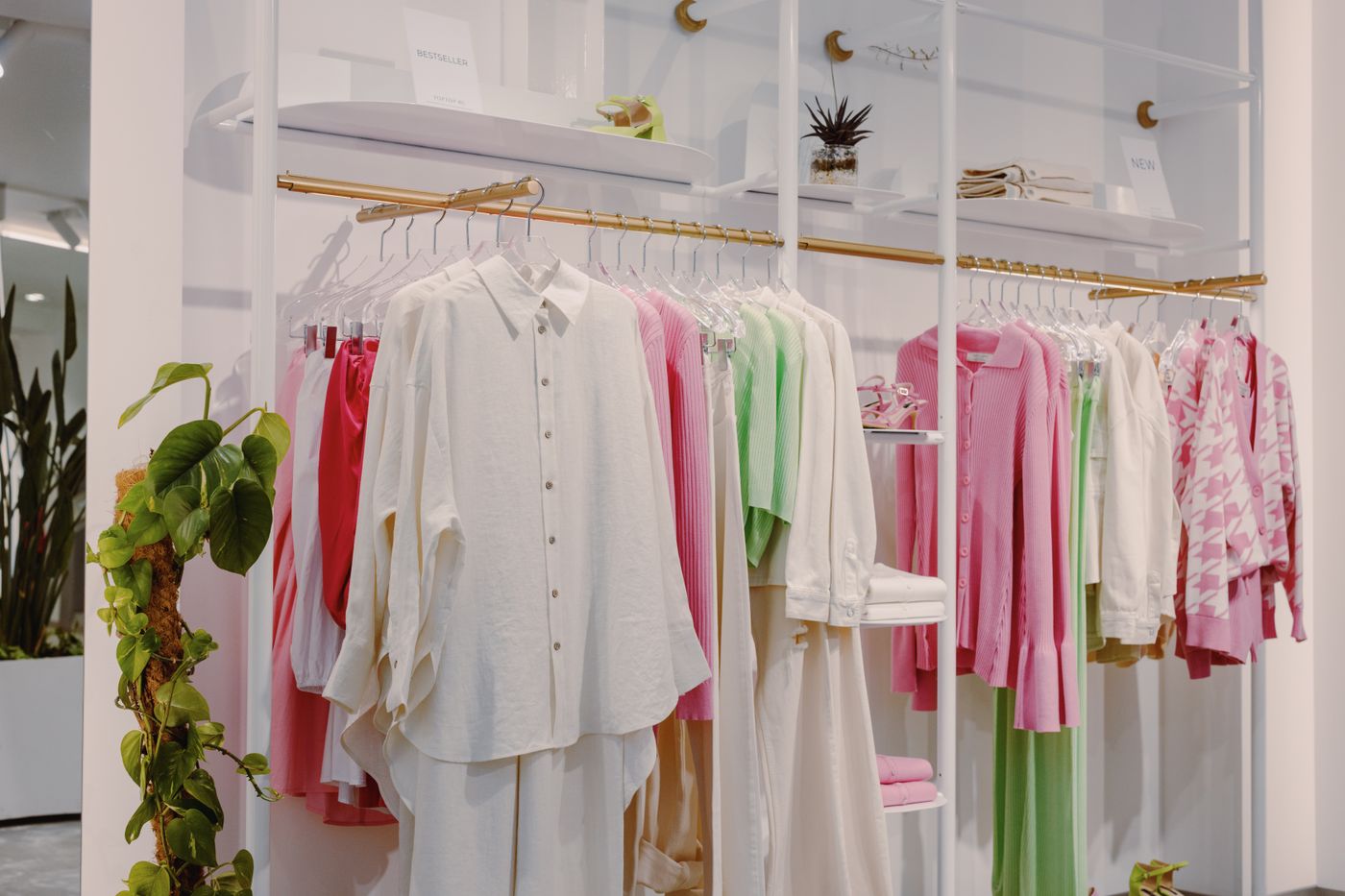
A clean fashion display illustrates the value of organizing a wardrobe around distinct garment roles.
The Foundation: Classic Cotton Tops
Cotton remains one of the most useful materials for everyday tops because it combines familiarity, breathability and easy styling. A classic cotton T-shirt can support casual denim outfits, relaxed tailoring, layered looks and weekend wardrobes. Its simplicity also makes it an ideal base for accessories.
The quality of a basic T-shirt becomes especially important when the garment is worn frequently. Look at the density of the fabric, the finishing around the neckline, the consistency of stitching and the way the fabric behaves after washing. A basic garment may appear inexpensive at first glance, but poor construction can make it lose its shape quickly.
For a versatile wardrobe, neutral cotton tops are usually easy to coordinate. White, black, soft beige, charcoal, navy and muted gray can work across many combinations. Once those foundations are covered, color can be introduced strategically rather than randomly.
A useful starting point is a small rotation of dependable basics. A classic cotton T-shirt can function as the central casual layer, while a second version in another neutral color provides visual variation without changing the basic styling strategy.
Understanding Fabric Before Choosing a Silhouette
Silhouette receives considerable attention in fashion, but fabric can change the appearance of the same cut dramatically. A soft cotton jersey creates a relaxed impression, while a structured woven fabric gives a sharper outline. Ribbed material adds texture and often follows the body's natural lines more closely. Satin introduces movement and light reflection.
Fabric selection should therefore reflect both the intended visual effect and the environment in which the garment will be worn. Lightweight materials can be valuable in warm conditions and for layering, while heavier knits can provide additional structure during cooler periods.
Soft Jersey
Useful for casual styling, relaxed outfits and everyday layering. It usually creates an easy, uncomplicated appearance.
Ribbed Texture
Adds visual dimension to simple silhouettes and can make a basic top feel more considered without requiring dramatic details.
Fluid Woven Fabric
Helpful when the objective is a polished appearance with movement, especially for blouses and elevated separates.
Ribbed Tops: Texture Without Complexity
Ribbed tops occupy an interesting position between basic and statement clothing. Their texture creates depth, allowing a relatively simple silhouette to look more distinctive. They can be particularly effective when the rest of the outfit is visually clean.
The key consideration is the scale of the rib. Fine ribbing tends to appear subtle and refined, while wider rib structures can create a more casual or graphic effect. Stretch also matters. A ribbed fabric should recover after movement rather than becoming permanently distorted.
For streamlined outfits, combine a ribbed top with tailored trousers, straight-leg denim or a simple midi skirt. Because the fabric already contributes texture, excessive accessories may not be necessary.
A ribbed short-sleeve top can also be useful as a transition piece. It can stand alone during warmer weather and become a base layer under a cardigan, overshirt or jacket when temperatures change.
Oversized Tops and the Art of Proportion
Oversized clothing can look intentional and sophisticated when proportions are controlled. The challenge is not the volume itself but the relationship between volume and the rest of the outfit.
An oversized crew neck often works particularly well with slimmer or more structured bottoms. Straight-leg trousers, fitted skirts or streamlined denim can create contrast. Another option is to balance volume with a defined accessory such as a structured bag or a simple belt.
Length matters as well. An oversized top that ends around the hip can produce a different effect from one that extends substantially lower. When evaluating a loose silhouette, consider where the hem falls relative to the widest parts of the body and how the garment behaves when tucked or partially tucked.
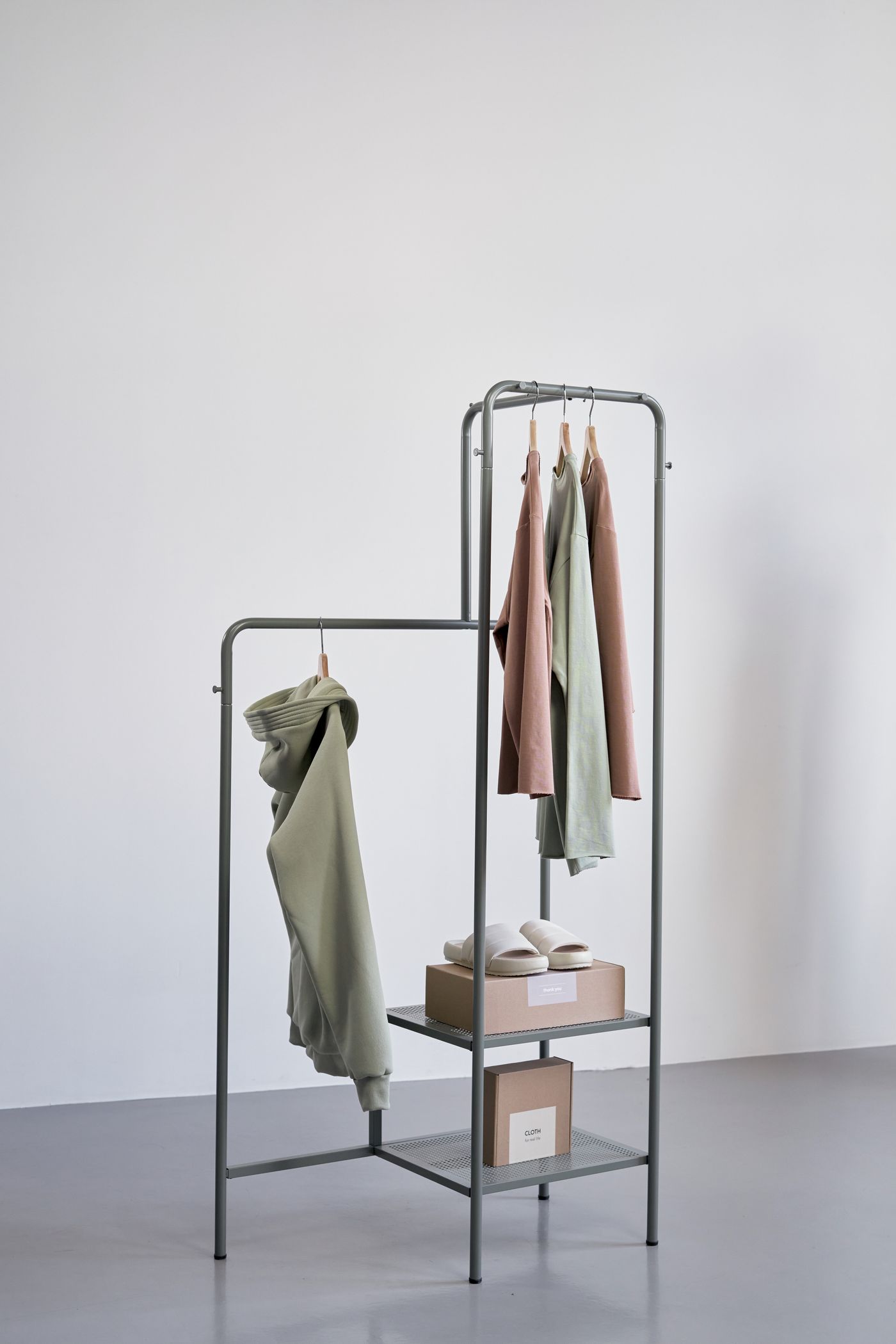
A garment display highlights how varied silhouettes can coexist within a carefully planned wardrobe.
For casual wardrobes, an oversized crew neck T-shirt can provide relaxed volume while remaining simple enough to style repeatedly. The most effective version is one that feels deliberately loose rather than simply oversized by several sizes.
Long-Sleeve Tops as the Transitional Layer
Long-sleeve basics are among the most adaptable pieces in a wardrobe because they occupy the middle ground between a short-sleeve T-shirt and heavier outerwear. They can be worn alone, underneath jackets or layered with sleeveless garments.
A long-sleeve top should ideally have sleeves that remain comfortable beneath other clothing. Excess fabric around the wrist or forearm can create unnecessary bulk. The neckline also deserves attention because it becomes visible whenever the garment is layered.
Neutral long-sleeve tops can be particularly valuable for transitional seasons. Black can create a sleek foundation, cream can soften darker outfits, while gray and navy can bridge casual and smart-casual wardrobes.
A long-sleeve basic top is especially practical when building outfits around jackets, cardigans and lightweight coats. Its simplicity allows the outer layer to remain the visual focus.
Necklines and Visual Balance
The neckline of a top changes the visual character of an outfit. Crew necks tend to feel classic and straightforward. V-necks introduce a more open vertical line. Higher necklines can create a clean, modern appearance, while softer open necklines can feel relaxed.
Rather than treating necklines as rules about body types, consider them as styling tools. A neckline can echo the shape of a necklace, balance a jacket collar or create contrast against a particular hairstyle. Personal comfort should remain part of the decision.
For professional wardrobes, clean and moderate necklines often offer broad styling flexibility. A V-neck blouse can be worn alone or beneath a blazer, while a crew neck can create a strong foundation under cardigans and overshirts.
A polished V-neck blouse can therefore fill an important role between casual basics and formal shirts, particularly when the fabric has enough structure to maintain a neat outline.
The Satin Button-Up: Adding Evening Energy
Satin changes the way light interacts with a garment. Its surface can create highlights and movement, making a simple button-up appear more sophisticated. However, because satin already has visual presence, styling is often most successful when other pieces remain relatively restrained.
For daytime wear, satin can be paired with denim, flat footwear and understated accessories. For evening outfits, tailored trousers, a sleek skirt or refined jewelry can shift the same blouse toward a more formal direction.
Pay attention to opacity, drape and button placement. A satin blouse should move comfortably without creating excessive pulling across the buttons. The best choice is not simply the shiniest fabric; it is the one whose finish works with the rest of the wardrobe.
A minimalist garment presentation reflects the polished role of elevated tops within a capsule wardrobe.
A satin button-up blouse is particularly useful when a wardrobe needs a piece that can move from refined daytime dressing into evening styling without requiring an entirely separate outfit.
Building a Practical Color Architecture
A successful color strategy is less about following a universal palette and more about creating relationships among the colors already present in the wardrobe. Start by identifying the colors that appear most frequently in existing trousers, skirts, jackets and shoes.
Neutral colors can provide the largest number of combinations, while accent colors add personality. Instead of buying several unrelated shades, select colors that share a visual relationship with the rest of the wardrobe.
Black, white, cream, gray, navy, taupe and other quiet neutrals can create dependable outfit foundations.
Muted green, burgundy, blue, dusty rose or other selected shades can introduce personality without dominating every combination.
Color repetition can also make a small wardrobe feel larger. A burgundy top might coordinate with a bag, shoes or subtle accessory, while a cream blouse can repeat the tone of a neutral coat. This creates cohesion without requiring identical colors throughout the outfit.
How to Build a Seven-Piece Tops Core
A compact tops wardrobe can be surprisingly capable when every piece has a different purpose. A seven-piece core might include two everyday T-shirts, one ribbed top, one long-sleeve layer, one oversized casual silhouette, one polished blouse and one elevated statement piece.
The exact number is less important than the distribution. Someone who works in a formal environment may require more blouses, while someone with a casual lifestyle may need more T-shirts and relaxed layers.
The goal is to create enough variation that outfits do not feel repetitive while keeping enough consistency that most pieces coordinate naturally.
Pairing Tops With Different Bottom Silhouettes
Bottom silhouettes can completely change the visual effect of the same top. A fitted ribbed top with wide-leg trousers creates a different proportion from the same top paired with skinny or straight-leg denim. Likewise, an oversized shirt may feel balanced with a narrow skirt but overly loose when paired with another very voluminous piece.
Think in terms of visual weight. When both top and bottom are oversized, the outfit may need structure from footwear, accessories, tailoring or a defined waist. When both pieces are fitted, texture and layering can prevent the result from feeling overly uniform.
For polished everyday styling, one practical approach is to contrast shapes. Pair a relaxed top with a cleaner bottom or a structured top with a softer bottom. This creates visual tension while keeping the outfit easy to understand.
Layering Without Creating Bulk
Layering works best when each garment has enough room to perform its role. A thin long-sleeve top can sit beneath a blazer without adding significant volume. A structured shirt may work better as an outer layer over a slim T-shirt.
Fabric thickness should increase gradually. Placing a heavy knit underneath a narrow jacket can restrict movement and create bunching. Instead, consider thin-to-thick layering, with lighter fabrics closest to the body and more substantial materials on top.
Neckline compatibility also matters. A high crew neck underneath a closed collar can look visually crowded, while an open blouse beneath a simple jacket may create a cleaner line.
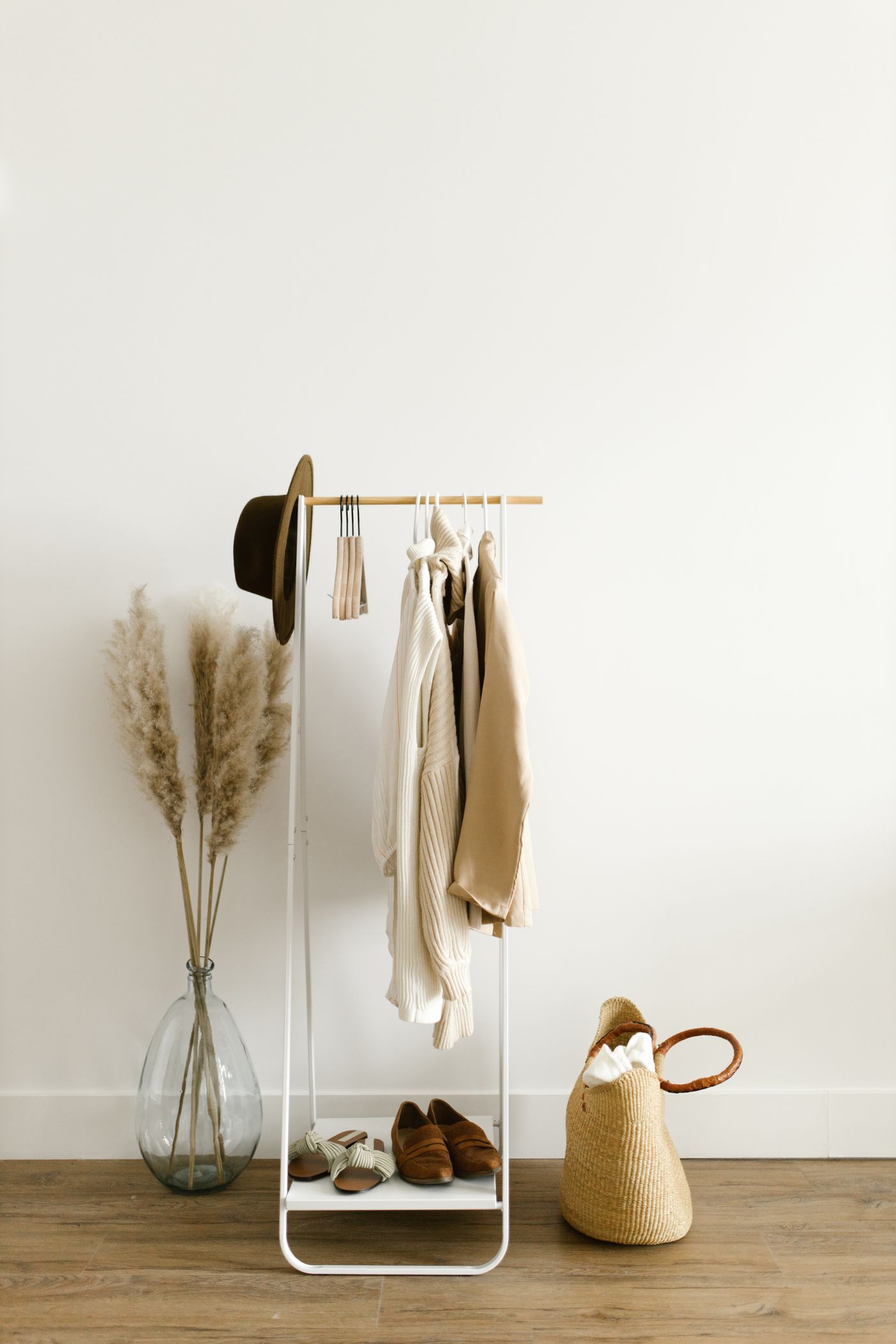
Neutral garments demonstrate the clean foundation required for versatile layering.
Casual Styling That Still Looks Considered
Casual does not have to mean careless. The difference often comes from proportion, fabric condition and the relationship between basic garments.
A clean T-shirt, straight denim and simple footwear can look polished when the shirt fits correctly and the colors work together. Adding a structured bag, refined watch or lightweight jacket can raise the visual level without making the outfit formal.
For weekends, travel or everyday errands, prioritize comfort while maintaining one or two deliberate style decisions. This could be a strong color combination, a tucked hem, an interesting texture or a carefully selected accessory.
For a broader selection of coordinated pieces, the women's clothing collection can serve as a reference point when planning complementary wardrobe categories.
Smart-Casual Tops for Modern Workwear
Smart-casual wardrobes require garments that can shift between professional and relaxed environments. The ideal top should look refined without feeling excessively formal.
A blouse with a clean neckline is an obvious choice, but polished cotton, fine ribbed knits and carefully cut long-sleeve tops can also perform well. The key is controlling the overall combination. Pair a casual top with tailored trousers and structured footwear, or combine a polished blouse with relaxed denim when the setting allows it.
Color can also determine formality. Deep neutrals and muted tones often appear more restrained, while brighter shades can make the outfit feel more expressive. Neither approach is inherently better; the appropriate choice depends on the environment and personal wardrobe goals.
Travel: Choosing Tops That Work Harder
Travel wardrobes benefit from tops that resist visual repetition. The strongest pieces are those that can be worn in multiple combinations, layered easily and remain comfortable during long periods of movement.
Neutral cotton T-shirts, lightweight long-sleeve tops, one refined blouse and one distinctive top can form the basis of a compact travel system. Select fabrics according to climate and access to laundry facilities rather than relying solely on appearance.
For longer trips, consider how easily each garment can be folded, how quickly it dries and whether it wrinkles noticeably. A beautiful top that requires constant pressing may become inconvenient during travel.
Seasonal Rotation and Storage
A wardrobe becomes easier to manage when tops are rotated according to actual weather and lifestyle needs. This does not mean removing everything that is out of season. Instead, place frequently used garments where they are easiest to access.
Fold knitwear and heavier pieces when appropriate to reduce stress on shoulders. Hanging lightweight woven blouses can help maintain their shape, provided the hanger supports the garment properly.
Seasonal rotation also provides an opportunity to inspect clothing. Remove pieces that no longer fit the current lifestyle, identify garments needing repair and create a short list of genuine gaps before shopping again.
How Fit Changes the Value of a Basic Top
Fit is one of the strongest determinants of whether a simple top appears polished. The shoulder seam, sleeve length, body width and hem placement all contribute to the final impression.
A classic T-shirt does not need to be tight to look intentional. It needs to have a silhouette that matches its purpose. Relaxed casual pieces can have more room, while layering pieces often work better when they sit closer to the body.
When trying on a top, move naturally. Raise the arms, sit down, rotate the shoulders and check the neckline. A garment that looks good while standing still but restricts movement may not deliver good everyday value.
The same principle applies to blouses. Check whether buttons remain flat, whether the shoulders sit correctly and whether the fabric falls smoothly when moving.
Shopping for Quality Instead of Quantity
Strategic shopping begins with a wardrobe audit. Count existing tops by category rather than simply by number. You may discover that you own many crew-neck T-shirts but very few polished blouses, or several neutral long-sleeve tops but no lightweight statement piece.
Once the imbalance is visible, shopping becomes more purposeful. Instead of buying another version of what already works, look for a garment that fills a specific gap.
Price should also be evaluated alongside expected frequency of wear. A garment worn once every few months has a different value equation from one worn weekly. Durability, versatility, comfort and maintenance requirements all contribute to the real usefulness of a purchase.
Before purchasing, compare the garment against your existing collection and ask whether it introduces a genuinely different function. This is where classic cotton options and other wardrobe basics can be assessed according to their role rather than their appearance alone.
Care Practices That Extend the Life of Tops
Even high-quality tops can deteriorate quickly when care instructions are ignored. Washing temperature, detergent strength, drying method and storage all influence longevity.
Whenever possible, follow the care label rather than applying one universal routine to every fabric. Cotton, ribbed stretch materials and satin may require different handling.
Avoid unnecessary high heat when the garment does not require it. Excessive heat can contribute to shrinkage, shape changes and stress on elastic fibers. Air drying can be useful for many everyday garments, while delicate materials may require more careful treatment.
Turn darker or printed tops inside out when appropriate to reduce surface friction. Avoid overloading the washing machine because excessive compression and rubbing can increase wear.
Creating a More Cohesive Wardrobe
Cohesion does not mean that every garment must look identical. A sophisticated wardrobe can contain casual, elegant, minimal and expressive pieces while still feeling unified.
One way to achieve cohesion is through repetition of subtle design elements. Similar neckline shapes, consistent metal tones, related neutral colors or recurring fabric textures can make separate outfits feel connected.
Another method is to repeat proportions. If your wardrobe frequently uses high-waisted trousers, select tops whose lengths work naturally with that rise. If you frequently wear long skirts, consider tops that create a clean visual break rather than competing with the skirt's length.
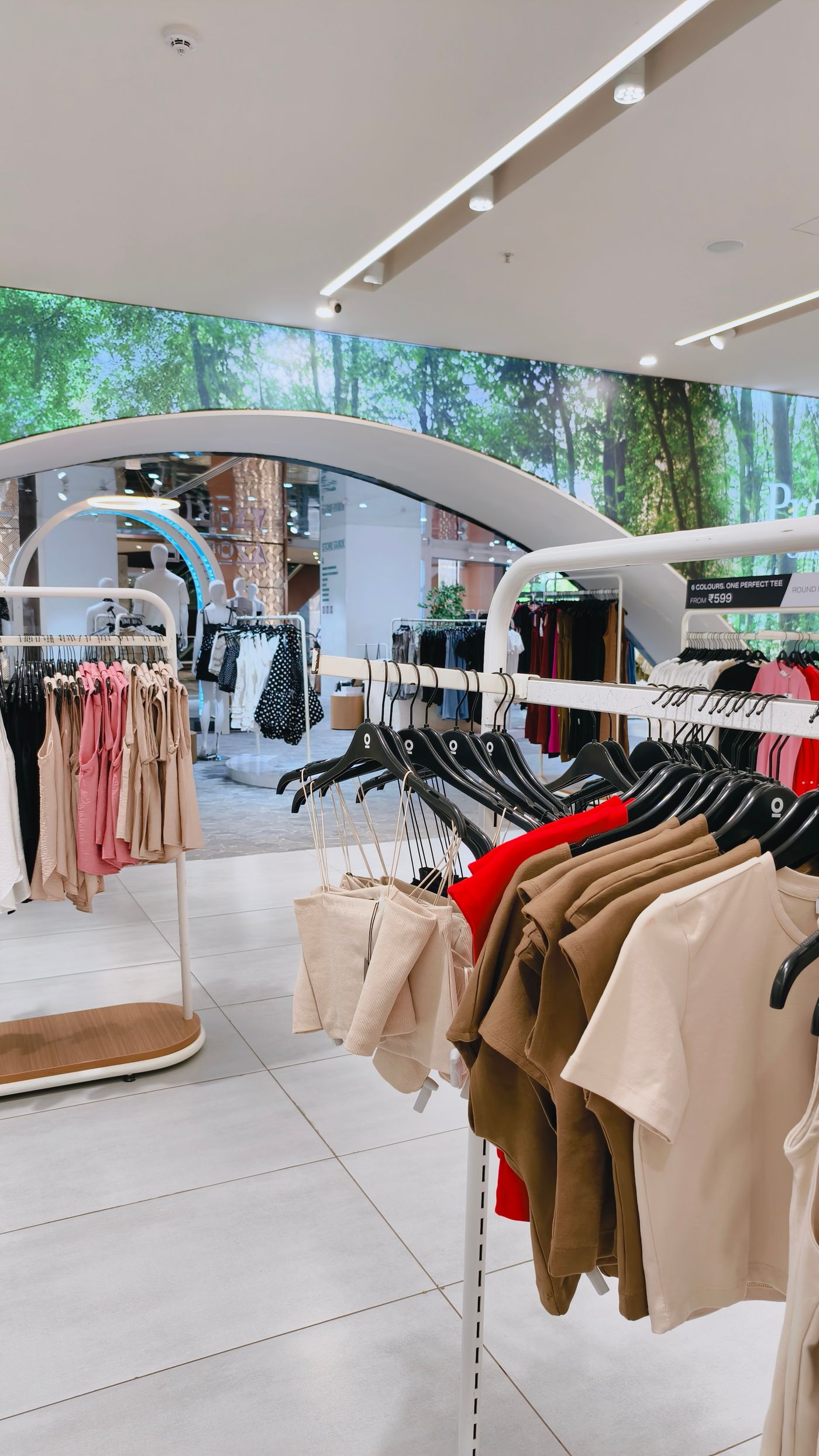
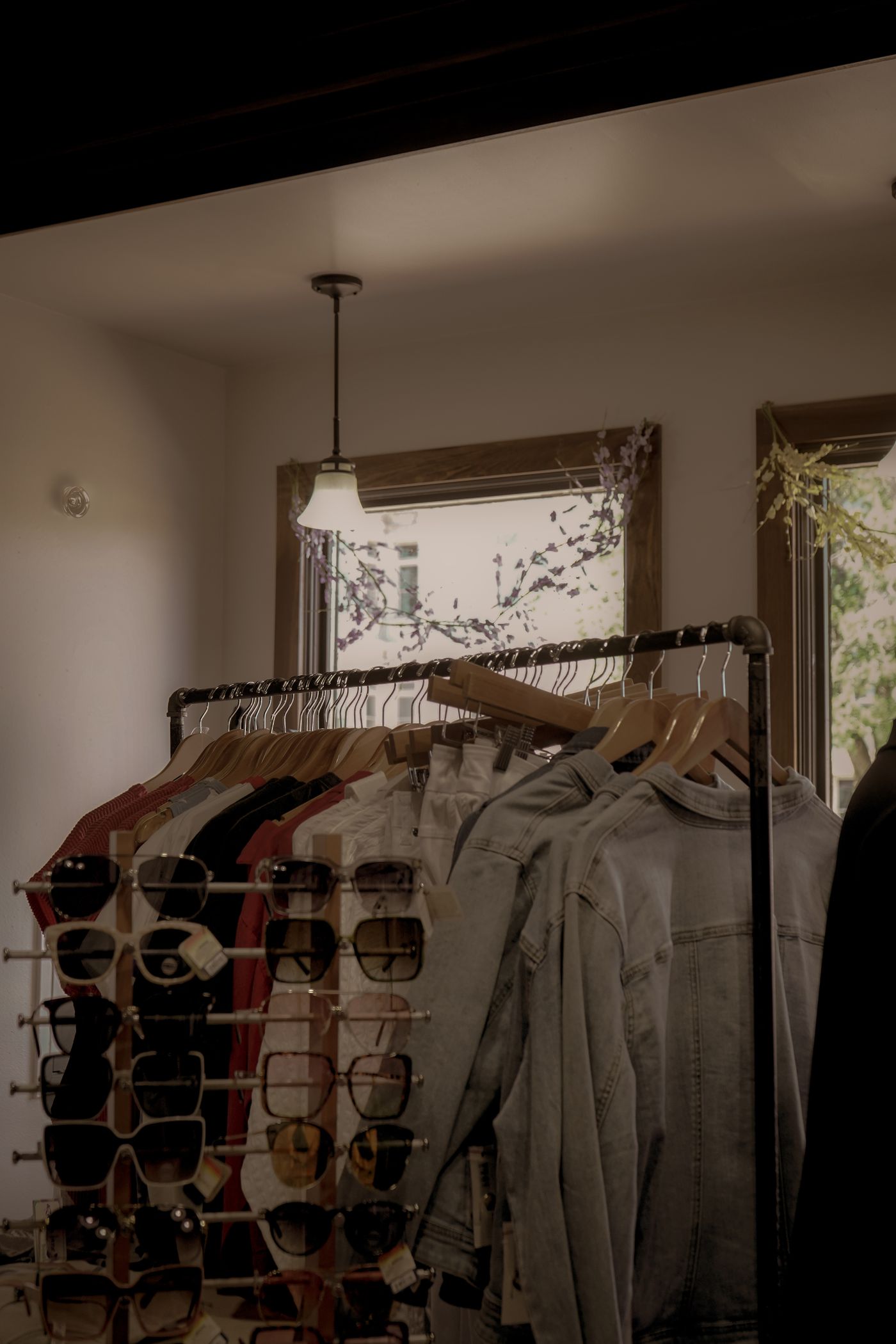
A contemporary clothing environment illustrates how organized garment categories can support a more intentional wardrobe.
Five Signs That a Top Has Strong Wardrobe Potential
Multiple Pairings
The garment coordinates naturally with several existing bottoms rather than depending on one specific outfit.
Useful Fabric
The material suits the environment, comfort requirements and level of formality for which the garment was purchased.
Reliable Fit
The cut remains comfortable during ordinary movement and works with the intended layering strategy.
Color Compatibility
The shade connects naturally with existing neutrals, accents and outer layers.
Repeat-Wear Potential
The design feels distinctive enough to be interesting but practical enough to wear frequently.
Easy Maintenance
The care requirements are realistic for the owner's lifestyle and available time.
Building Outfits Around One Hero Top
A useful styling exercise is to select one top and create several outfits around it. This demonstrates whether the garment truly offers versatility.
For example, a satin blouse can be paired with tailored trousers for a polished look, denim for relaxed sophistication and a skirt for evening dressing. A classic cotton T-shirt can work with denim, wide-leg trousers, a blazer or a casual skirt.
This exercise is also valuable before shopping. If a new top does not inspire multiple realistic outfits, its versatility may be lower than it initially appears.
An elevated satin button-up demonstrates how one garment can occupy multiple levels of formality when combined with different supporting pieces.
Minimalism Without Losing Personality
A capsule wardrobe should not become visually boring. Minimalism is about reducing unnecessary duplication, not eliminating personality.
Personality can come from color, texture, silhouette or small design details. A ribbed texture may be enough to distinguish one neutral top from another. A slightly unusual collar can transform a simple blouse. A saturated accent color can become the focal point of an otherwise restrained outfit.
The key is intentional distribution. If every top is a statement piece, it becomes difficult to create quiet outfits. If every top is completely basic, the wardrobe may feel repetitive. A balanced collection combines dependable foundations with selected pieces that provide visual interest.
Professional Wardrobe Specification Guide
| Top Category | Primary Role | Useful Fabrics | Styling Direction | Ideal Wardrobe Position |
|---|---|---|---|---|
| Classic Cotton T-Shirt | Everyday foundation | Cotton jersey, cotton blends | Casual, layered, relaxed | Core essential |
| Ribbed Short-Sleeve Top | Textured basic | Ribbed cotton, stretch blends | Streamlined, casual, layered | Versatility piece |
| Oversized Crew Neck | Relaxed statement | Jersey, soft cotton | Contemporary, casual | Volume option |
| Long-Sleeve Basic | Transitional layer | Fine jersey, cotton blends | Layered, minimal | Seasonal essential |
| V-Neck Blouse | Polished versatility | Woven fabrics, soft blends | Smart-casual, professional | Refined core |
| Satin Button-Up | Elevated dressing | Satin, fluid woven fabric | Evening, polished, sophisticated | Accent essential |
A Practical Seven-Day Styling Framework
A well-organized tops collection should make everyday dressing easier. One practical method is to assign different roles to different days rather than trying to create a completely new aesthetic each morning.
For a relaxed day, start with a cotton T-shirt and denim. For a professional day, switch to a blouse with tailored trousers. On a cooler day, use a long-sleeve basic underneath a jacket. For a social evening, choose a satin blouse and simplify the rest of the outfit.
Weekend dressing can use the oversized silhouette, while a ribbed top can provide a slightly more fitted option for casual plans. The exact combinations depend on personal lifestyle, but the principle remains consistent: every top should have a recognizable job.
Using Accessories Without Overloading the Outfit
Accessories should support the top rather than compete with it. A simple crew neck can handle a necklace, scarf or statement earrings because its neckline leaves visual space. A blouse with a distinctive collar may need fewer additions.
Satin and other reflective fabrics already attract attention, so minimal accessories can often produce a cleaner result. Ribbed textures can also benefit from restrained jewelry because the fabric itself contributes surface interest.
Structured bags and shoes can help balance oversized silhouettes. Conversely, softer accessories can complement a structured blouse and create a more relaxed appearance.
How to Refresh Existing Tops Without Buying More
Wardrobe improvement does not always require new purchases. Changing styling techniques can make familiar garments feel different.
Try a partial tuck with a classic T-shirt, layer a blouse under a lightweight jacket, wear a long-sleeve top beneath a sleeveless dress, or pair an oversized shirt with a more structured bottom. Small changes in proportion can significantly alter the overall appearance.
Color combinations also provide an easy refresh. A neutral top that has always been paired with black trousers may look entirely different with cream, denim, olive or a muted accent shade.
Another option is to change footwear and accessories while keeping the top unchanged. This can shift an outfit from casual daytime to a more refined setting without replacing the core garment.
Wardrobe Gaps Worth Identifying
After reviewing the existing collection, create a short gap list. Common gaps include a dependable white or neutral T-shirt, a polished blouse, a versatile long-sleeve layer or an elevated top suitable for evening events.
Do not automatically fill every gap immediately. Prioritize according to actual lifestyle frequency. Someone who rarely attends formal events may not need several evening blouses. Someone working in an office may benefit from multiple polished tops instead.
The objective is to align the wardrobe with real life rather than an imaginary lifestyle.
Making Online Top Shopping More Precise
Online shopping can be easier when product evaluation is based on measurable criteria. Read the fabric composition, review available measurements, compare the garment's stated fit and examine construction details whenever product photography allows.
Do not rely only on generic labels such as “relaxed,” “oversized” or “regular.” Different brands can interpret these terms differently. Compare actual measurements when possible.
Think about return policies, care requirements and shipping time as part of the purchase decision. A garment's practical value depends on the complete ownership experience, not simply the photograph.
When exploring a women's clothing assortment, compare categories such as oversized crew necks, ribbed short-sleeve tops and polished blouses rather than judging each garment in isolation.
The Relationship Between Comfort and Style
Comfort should not be treated as the opposite of style. In a practical wardrobe, comfort can support better styling because garments that feel good are more likely to be worn repeatedly.
Check softness, stretch, sleeve movement and neckline comfort. Consider whether the fabric becomes irritating after several hours. A beautiful top that becomes uncomfortable quickly may have less practical value than a simpler garment that can be worn all day.
Comfort also includes maintenance. A top that requires complicated care after every wear may not suit a busy lifestyle, even if its appearance is excellent.
Design Details That Make a Basic Top More Interesting
Small design decisions can create significant differences. A slightly curved hem, refined seam, textured knit, elegant button, subtle pleat or carefully shaped sleeve can give a basic top a distinctive character without turning it into a trend-dependent statement.
These details are particularly useful in capsule wardrobes because they create variety while maintaining versatility.
When choosing such details, consider whether they integrate with existing garments. A subtle design feature can work across seasons, while a highly specific trend may have a shorter useful life.
Why Wardrobe Versatility Is a Better Goal Than Maximum Variety
Variety is useful, but too much variety can create decision fatigue. If every top has a different color, neckline, fabric and silhouette, creating coordinated outfits may require more thought.
Versatility creates a different kind of variety. The same garment can produce several visual outcomes because it works with different bottoms, layers, accessories and footwear.
This is why a relatively compact collection can feel larger than it actually is. The value lies in the number of combinations rather than the number of garments alone.
Final Wardrobe Checklist
- Do the everyday tops cover your most common activities?
- Do you have enough neutral foundations for easy coordination?
- Is there at least one textured top to add visual interest?
- Do you have a long-sleeve layer for changing temperatures?
- Is there an oversized silhouette if relaxed styling suits your lifestyle?
- Do you have a polished blouse for professional or smart-casual occasions?
- Is there an elevated top suitable for dinners and evening events?
- Can most tops work with at least three existing bottoms?
- Are the fabrics appropriate for your climate and daily routine?
- Can you realistically maintain the garments according to their care requirements?
A balanced women's tops collection can therefore be understood as a small wardrobe system rather than a random collection of shirts and blouses. The strongest system combines dependable basics, controlled variation, appropriate fabrics, thoughtful proportions and a color structure that allows garments to work together.
The result is a wardrobe that supports real life: casual mornings, professional schedules, travel days, changing weather, social occasions and evenings that require something more polished. By choosing each top according to function as well as appearance, it becomes easier to build outfits that look intentional without requiring excessive shopping or complicated styling.
Frequently Asked Questions
How many women's tops should a capsule wardrobe contain?
There is no universal number. A compact wardrobe may function well with around seven to twelve strategically selected tops, while a larger collection may be appropriate for people with varied professional, social and seasonal needs.
Which top is the most versatile?
A classic neutral cotton T-shirt is often highly versatile because it can work with denim, trousers, skirts, jackets and casual layers. Versatility ultimately depends on the rest of the wardrobe.
Are oversized tops difficult to style?
They can be easy to style when proportions are balanced. Pairing volume with a more streamlined bottom is one straightforward approach.
Why are ribbed tops useful?
Ribbed texture adds visual interest to relatively simple silhouettes. A ribbed top can function as a standalone garment or as a layering piece.
Are satin blouses suitable for daytime?
Yes. A satin blouse can be styled casually with denim, simple footwear and understated accessories. The surrounding pieces determine much of the final level of formality.
What should I look for in a cotton T-shirt?
Consider fabric feel, density, neckline construction, stitching, fit, shrinkage potential and how well the shirt coordinates with existing bottoms.
How can I make basic tops look more elegant?
Use proportion, tailored bottoms, structured accessories, refined footwear and thoughtful layering. A simple top can appear polished when the complete outfit is balanced.
Should every wardrobe include a V-neck blouse?
Not necessarily. A V-neck blouse can be useful, particularly for polished outfits, but the best neckline is the one that suits personal comfort, styling preferences and existing garments.
What makes a top suitable for layering?
Moderate thickness, comfortable sleeves, a compatible neckline and a silhouette that does not create excessive bulk are useful characteristics for layering.
How can I avoid buying duplicate tops?
Organize the wardrobe by category and identify existing quantities before shopping. Ask whether the new garment provides a different function, silhouette, fabric or styling opportunity.
Are neutral tops boring?
Not necessarily. Texture, proportions, fabric quality and accessories can create significant visual variety even when the color palette remains restrained.
How can I choose tops for travel?
Prioritize comfortable fabrics, easy layering, manageable care requirements and colors that coordinate with multiple bottoms.
How often should tops be replaced?
Replacement depends on wear, fabric condition, fit and lifestyle. A frequently worn basic may need attention sooner than an occasional blouse.
Is an oversized crew neck a wardrobe essential?
It can be valuable for wardrobes that favor relaxed contemporary styling. It is less necessary if the preferred silhouette is consistently fitted or tailored.
What is the advantage of a long-sleeve basic?
It provides a flexible transitional layer and can be worn independently or beneath jackets, dresses, cardigans and other garments.
How should satin tops be cared for?
Care depends on the exact fiber composition. Always follow the garment's care instructions and avoid assuming that every satin fabric should be washed or dried in the same way.
Can one blouse work for both office and evening outfits?
Yes. A polished blouse can often move between settings when paired with different trousers, skirts, footwear and accessories.
What is the best way to build a color palette?
Start with colors already present in your wardrobe. Build around a small group of dependable neutrals, then add selected accent shades that coordinate with them.
How can I improve my wardrobe without shopping?
Experiment with new combinations, layering, partial tucks, accessories and different proportions. Styling changes can create new outfits from familiar pieces.
Where should I begin when rebuilding my tops collection?
Begin with a wardrobe audit. Identify missing functions, remove or repair unsuitable pieces, then prioritize versatile garments that solve genuine gaps rather than duplicating what you already own.
Comments
Post a Comment