The French Stay Strategy: How to Choose Exceptional Hotels, Smart Locations & Seamless Travel Across France
The French Stay Strategy: How to Choose Exceptional Hotels, Smart Locations & Seamless Travel Across France
Choosing accommodation in France is not simply a matter of selecting a beautiful room. The strongest hotel decision connects location, comfort, transportation, budget, room design, daily routines and the overall rhythm of the journey. This professional guide explains how to build that strategy from the first search to the final night.
Accommodation as the Foundation of a French Journey
A successful trip to France is built from many individual decisions, but accommodation is one of the few decisions that influences almost every day. The hotel determines where travelers wake up, how easily they reach attractions, how much time they spend commuting, where they leave luggage, how comfortably they recover after sightseeing, and how smoothly they begin the following morning.
For that reason, experienced travelers increasingly approach hotel selection as a planning exercise rather than a simple transaction. They consider the destination first, the neighborhood second, the room requirements third, and the individual property fourth. This sequence helps prevent attractive photography, temporary discounts, or impressive amenity lists from distracting from the practical requirements of the journey.
A broad starting point such as Hotels & Resorts in France can help establish the accommodation landscape before the traveler narrows the search to a particular destination. This is particularly useful for multi-city itineraries in which the traveler may stay in several different types of properties.
France offers a wide range of accommodation environments. Paris is highly urban and transportation-focused. Nice combines city life with the Mediterranean coast. Lyon offers historic districts and a strong culinary identity. Marseille has a distinctive waterfront environment. Other cities such as Strasbourg, Rennes, Reims, Grenoble, Dijon and Toulouse create completely different combinations of architecture, transportation, climate and travel pace.
Define the Purpose of the Trip Before Choosing the Hotel
The same hotel can be ideal for one traveler and inconvenient for another because accommodation needs are determined by the purpose of the trip. A romantic weekend has different requirements from a family holiday. A business trip has different priorities from a cultural tour. A road trip requires different logistics from a short city break.
Start by writing down the three most important objectives of the journey. For a cultural trip, they may be museums, architecture and neighborhood exploration. For a coastal vacation, they may be relaxation, outdoor access and regional excursions. For business travel, they may be transportation, quietness and workspace.
Then identify what the hotel must provide. If sleep quality is critical, prioritize a quiet room and comfortable bedding. If the traveler expects to spend time inside the property, room size, seating and natural light become more important. If the hotel is primarily a base for sightseeing, location and transportation may matter more than decorative features.
This simple distinction prevents travelers from paying for features they will never use. A large suite can be unnecessary for someone who spends twelve hours every day outside. Conversely, a small room may become frustrating for someone working remotely or staying for two weeks.
The Difference Between a Beautiful Hotel and a Useful Hotel
Luxury photography can create a powerful emotional reaction. Elegant furniture, marble bathrooms, dramatic windows and carefully arranged bedding make it easy to imagine the perfect vacation. Yet professional hotel selection requires another layer of analysis.
Look at the room from a functional perspective. Where will luggage go? Where will clothing be stored? Can two people walk around the bed comfortably? Is there a practical place to charge devices? Is the desk large enough to use? Does the bathroom door interfere with the main circulation path?
These questions are rarely the most glamorous part of a hotel search, but they often determine whether the room feels comfortable after the first day.
The ideal accommodation combines visual identity with practical design. A beautiful room should also be easy to live in.
How to Evaluate Hotel Photographs Professionally
Hotel photography should be treated as useful evidence rather than absolute proof. A photograph can reveal furniture, lighting, colors, windows and general layout, but it may not show the entire room or the less attractive angles.
Start with the bed. Look at its position relative to the windows, walls and other furniture. Then examine the floor area around it. If the photographer has captured a wide view, study how much open space remains around the bed.
Next, examine the window. Natural light can dramatically change the perception of a room. However, a large window facing a busy street can create a different experience from a smaller window overlooking a quiet courtyard.
Finally, inspect the bathroom whenever photographs are available. Travelers should look for counter space, storage, shower dimensions, lighting, towel placement and overall circulation.
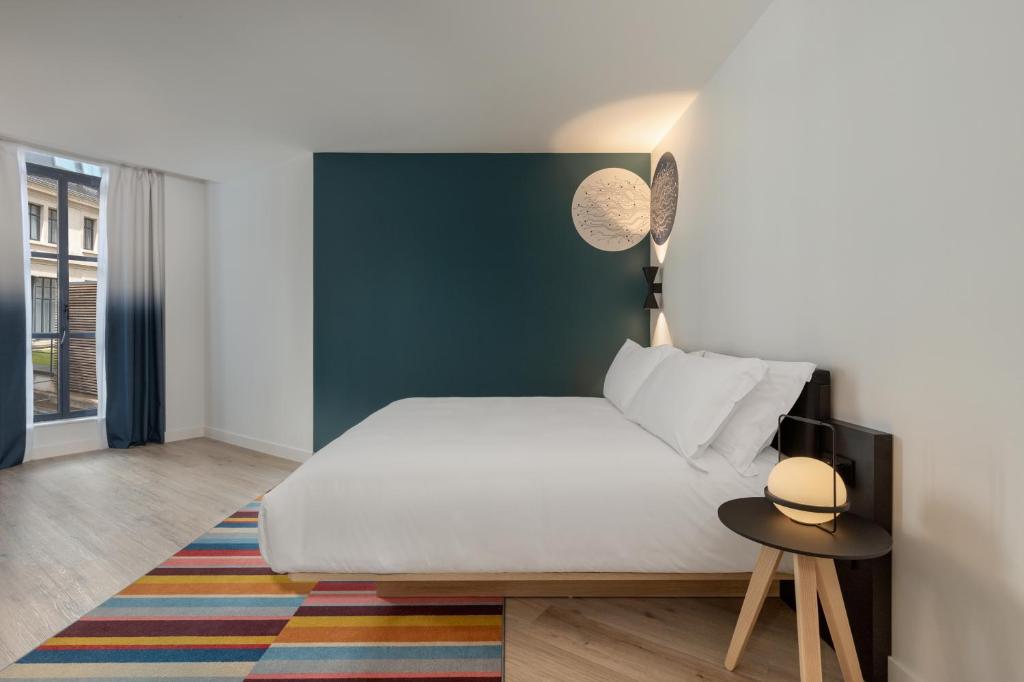
Room Layout Often Matters More Than Room Size
Room size is an important factor, but the number itself does not tell the complete story. A well-planned room can feel significantly more spacious than a larger room with poor furniture placement.
Consider circulation first. Can guests move from the entrance to the bathroom without navigating around luggage? Can the wardrobe be opened without blocking the bed? Is there a clear path to the window?
For couples, consider whether both travelers can use the room simultaneously without constantly crossing one another's space. For families, consider where luggage, children's belongings and additional sleeping arrangements will be placed.
For long stays, storage becomes increasingly important. A room that seems perfectly adequate for two nights may feel restrictive after seven nights if there are insufficient shelves, drawers or hanging areas.
The Importance of Sleep Quality
A hotel room is ultimately a place to recover. France encourages long days of walking, sightseeing, dining, shopping and exploration. If sleep quality is poor, even the most attractive itinerary can become exhausting.
Travelers should therefore investigate mattress comfort, pillow options, room temperature, curtains, street noise and corridor noise. Repeated comments in recent reviews can be especially informative because they may reveal recurring environmental characteristics.
Room location within the building can also matter. Rooms close to elevators, staircases, service corridors, restaurants or busy streets may experience more activity.
A quiet room is not necessarily a more expensive room. Sometimes the difference comes simply from room orientation or floor location. When possible, travelers can ask the hotel whether a quieter room is available.
Choosing a Hotel in Paris With a Strategic Mindset
Paris is one of the clearest examples of why location matters. A hotel may appear close to a famous landmark but still require significant travel to reach other parts of the city.
When comparing a Hotel in Paris, identify the attractions and neighborhoods that will dominate the itinerary. Then examine transportation connections between the hotel and those areas.
Travelers should also consider their evening routine. Some visitors enjoy lively streets filled with restaurants, cafés and activity. Others prefer quieter surroundings and are willing to travel farther for dinner or entertainment.
A short Paris stay usually increases the importance of location because every hour has greater value. A longer stay provides more flexibility and can justify choosing a quieter neighborhood.
Paris Room Selection
Parisian properties can vary considerably in room configuration. Some rooms emphasize historic details, while others use modern minimalist layouts. Travelers should examine actual room categories rather than assuming that all rooms within the same property are similar.
Pay attention to bed dimensions, storage, elevator access, bathroom layout, air conditioning and window orientation. For travelers carrying large luggage, room access and storage can become surprisingly important.
Nice and the Art of Mediterranean Accommodation
Nice introduces a different accommodation equation. The city combines urban exploration with coastal relaxation, and many travelers divide their time between restaurants, historic streets, waterfront areas and regional excursions.
When evaluating a Hotel in Nice, decide whether the primary objective is beach access, old-town exploration, transportation, relaxation or a combination of these priorities.
Outdoor space can become especially valuable in a Mediterranean destination. A balcony or terrace may be useful for morning coffee, quiet evenings or simply enjoying natural light.
However, travelers should examine the actual value of outdoor space. A narrow balcony with limited privacy is different from a spacious terrace with comfortable seating. View direction, noise and weather exposure also matter.
A premium sea view can be memorable, but travelers should ask how much time they expect to spend inside the room. The answer can determine whether the additional cost represents genuine value.
Nice as a Base for Regional Exploration
Travelers often use Nice as a base for exploring the wider region. This means the accommodation decision should include transportation considerations.
If the itinerary includes frequent regional trips, proximity to transportation can be more important than a decorative room feature. If the journey is primarily about relaxation, the opposite may be true.
This is an excellent example of why hotel selection should begin with the itinerary rather than the property.
Lyon: Combining Walkability, Design and Daily Comfort
Lyon offers a particularly interesting accommodation environment because the city can appeal simultaneously to travelers interested in history, architecture, food, business and contemporary design.
When comparing Hotels in Lyon, consider which parts of the city will occupy most of the itinerary. If dining is the primary objective, proximity to restaurants may be more valuable than additional hotel amenities.
If cultural exploration is the priority, walkability and public transportation can become central considerations. If the stay involves business meetings, workspace and transport connections may take precedence.
Lyon also demonstrates the value of efficient room design. A compact room can work extremely well when the furniture, lighting, storage and circulation are carefully planned.
Marseille: Matching the Hotel to the Mediterranean City
Marseille has its own accommodation logic. The waterfront, historic districts, restaurants, cultural sites and regional excursions can all influence where travelers should stay.
When evaluating Hotels in Marseille, begin by deciding what role the city plays in the itinerary. Is it the primary destination, a short stop, or a base for exploring surrounding areas?
Waterfront accommodation can create a strong sense of place, but travelers should also consider transportation and evening routines. A hotel that provides a beautiful view but complicates every daily transfer may not fit an active itinerary.
Why Transportation Belongs in the Hotel Decision
Accommodation and transportation are interconnected. A hotel that appears less expensive can become more costly if travelers must repeatedly use taxis or spend long periods commuting.
Conversely, a slightly more expensive hotel can create value by placing travelers closer to the places they actually intend to visit.
This calculation should include time as well as money. Lost time can be particularly significant on short trips.
Travelers planning a road-based itinerary should also evaluate vehicle access, parking and departure routes before selecting the property.
Planning Rental Cars Across France
A vehicle can create flexibility when the itinerary includes rural areas, smaller towns, coastal routes or destinations that are inconvenient by public transportation.
Travelers can compare Car rentals in France as part of the wider accommodation strategy rather than treating the rental as an unrelated purchase.
The correct vehicle category depends on passenger numbers, luggage, driving distance, parking conditions and road requirements. A large vehicle may provide comfort but create difficulties in compact urban areas.
Travelers should also consider whether the vehicle is needed for the entire journey. Sometimes the most efficient plan is to explore a major city without a car and rent a vehicle only for the regional portion.
Paris and Vehicle Planning
Paris provides a useful example of the importance of timing a rental strategically. Travelers spending several days inside the capital may not need a vehicle during the urban portion of the journey.
When considering Car rentals in Paris, examine pickup location, vehicle dimensions, luggage capacity, insurance terms and the next destination.
Pickup timing is also important. Collecting a vehicle immediately after a long international flight may create unnecessary pressure. Travelers may prefer to explore Paris first and collect the vehicle when leaving the city.
Hotel luggage storage can support this strategy by allowing travelers to move between transportation modes without carrying everything throughout the city.
Nice and Rental Car Logistics
The French Riviera can be well suited to road-based exploration depending on the itinerary. A vehicle may be useful for travelers who want to explore several locations beyond their main base.
When comparing Car rentals in Nice, evaluate the entire route rather than choosing solely on the daily rental price.
Parking is particularly important. Before booking a centrally located hotel, verify whether parking is available and whether reservations are required.
Airport Connections and the First Night in France
International arrivals often involve fatigue, luggage and uncertainty. The first hotel should therefore be evaluated according to arrival logistics as well as sightseeing.
Travelers planning Flights to Paris Charles de Gaulle Airport (CDG) should consider how arrival time affects transportation, check-in, luggage handling and the first evening.
A hotel that is convenient for sightseeing may not necessarily be convenient after a late arrival. Likewise, an early departure can make airport access more important than neighborhood atmosphere.
The final hotel night should be evaluated according to departure logistics rather than simply repeating the same criteria used for the middle of the trip.
The Value of a Well-Planned First Night
The first night sets the tone for the journey. Travelers arriving after a long flight usually benefit from a simple arrival route, predictable check-in and comfortable sleep.
There is little benefit in designing a complicated first evening. A practical hotel, an easy transfer and a quiet room can provide a strong beginning.
The first morning can then become the moment when the more ambitious itinerary begins.
Natural Light and the Perception of Space
Natural light is one of the most influential elements in interior perception. A bright room can feel larger and more energetic, while a darker room can feel intimate and relaxing.
Travelers should match lighting preferences to their daily routines. Remote workers may value daylight more strongly. Travelers who spend most of the day outdoors may prioritize blackout curtains and nighttime comfort.
Window orientation also matters. A room facing a busy avenue can receive excellent daylight but also experience significant street noise.
Storage: The Hidden Factor in Hotel Comfort
Storage is rarely the feature travelers discuss first, but it can become one of the most important aspects of a longer stay.
Look for wardrobes, drawers, shelves, luggage benches and hanging space. Even a small amount of additional storage can prevent a room from becoming cluttered.
Travelers moving between several French cities should pay particular attention to this because luggage is repeatedly packed and unpacked.
For families, storage becomes even more valuable because clothing, shoes, electronics and personal items quickly accumulate.
Workspace for Modern Travelers
Even leisure travelers may need a practical work surface. Phones, cameras, chargers, passports, maps, tickets and travel documents all need somewhere to be organized.
A dedicated desk is especially useful for business travelers and remote workers. Look for sufficient surface area, comfortable seating, adequate lighting and convenient power outlets.
The location of the desk matters as well. A workspace beside a noisy elevator may be less useful than a smaller desk in a quiet part of the room.
Bathroom Functionality
A hotel bathroom is used multiple times every day, so functionality matters more than decorative presentation alone.
Look for sufficient counter space, storage, good lighting, towel placement and comfortable movement. Travelers who prefer showers should examine shower dimensions and access. Families may need bathrooms that allow multiple people to prepare efficiently.
For longer stays, bathroom storage becomes particularly important because toiletries and personal products can quickly fill limited surfaces.
Quietness and Room Position
Noise is one of the most common reasons an otherwise attractive room can become uncomfortable. Travelers should look for recurring comments about traffic, nightlife, elevators, service corridors and neighboring rooms.
Hotel buildings differ significantly in construction, so there is no universal rule that guarantees a quiet room. Still, travelers can ask for rooms away from elevators and major service areas when appropriate.
Interior-facing rooms can sometimes reduce street noise, although the actual result depends on the building and surroundings.
Design That Works for Real Travelers
Good hotel design is more than decorative styling. It should make the room easy to understand and use.
Furniture should create clear circulation. Lighting should provide both general illumination and focused light. Storage should be accessible. Seating should be comfortable. The room should have a coherent visual identity without sacrificing practicality.
French accommodation can be especially interesting in this respect because properties may combine historic architecture with contemporary interiors.
Historic Hotels Versus Contemporary Hotels
Historic hotels can offer architectural character, original details, high ceilings, traditional moldings and a strong sense of place. Contemporary hotels may emphasize efficiency, clean lines, modern lighting and technology.
The right choice depends on the traveler's preferences.
Those interested in architecture may value historic details. Travelers focused on practical functionality may prefer contemporary design. Many properties successfully combine both approaches.
Boutique Hotels and Their Distinctive Character
Boutique hotels often emphasize individuality. Rooms may use unique furniture, local references, unusual color combinations or distinctive architectural features.
This can create a memorable stay, but travelers should still inspect practical details. Distinctive design should not replace good bedding, useful storage, effective lighting and comfortable bathrooms.
The strongest boutique properties combine personality with function.
Large Hotels and Predictable Services
Larger properties may offer more standardized room categories, broader service infrastructure and a wider selection of facilities.
This can be useful for families, business travelers and travelers who value predictable procedures.
However, larger size does not automatically mean better comfort. The traveler should still evaluate the room category, location within the building, noise environment and actual amenities.
Hotel Breakfast as a Strategic Decision
Breakfast should be evaluated according to the itinerary. Travelers with early departures may prioritize speed and convenience. Others may prefer exploring local bakeries and cafés.
Compare the breakfast schedule, price, variety and convenience with the alternatives available nearby.
Families may find hotel breakfast particularly convenient. Couples and solo travelers may prefer a neighborhood café for a more flexible morning.
Family Accommodation Planning
Families should never rely solely on the phrase “family room.” Confirm the exact sleeping arrangement, number of beds, room dimensions, bathroom configuration and connecting-room availability.
Elevator access can also matter, particularly for families with strollers or significant luggage.
Location should be evaluated carefully. Hotels near pedestrian streets, parks, restaurants and public transportation can reduce the number of complicated transfers during the day.
Accommodation for Couples
Couples may place greater emphasis on atmosphere, privacy, views, balconies, lighting and dining access.
A romantic hotel does not necessarily need to be the largest or most expensive property. A comfortable bed, attractive lighting, pleasant surroundings and an appropriate neighborhood can create a stronger experience.
Outdoor space can be valuable when the couple expects to spend time at the hotel rather than treating the room solely as a sleeping base.
Business Travel in France
Business travelers generally benefit from predictable functionality. Reliable connectivity, practical workspace, comfortable seating, quiet surroundings and convenient transportation can have greater value than elaborate decoration.
Early breakfast, luggage storage and efficient check-in can also reduce friction during a busy schedule.
A useful business room should create a clear distinction between work and rest. When possible, a separate desk area is preferable to working from the bed.
Long Stays and Apartment-Style Accommodation
Longer stays often change the accommodation calculation. A kitchenette, refrigerator, additional storage, laundry access or separate living area can significantly improve convenience.
Travelers staying for a week or more should evaluate the neighborhood as a temporary living environment rather than simply a tourist location.
Grocery stores, pharmacies, bakeries, laundries and public transportation may become more important than proximity to one famous attraction.
How to Calculate the Real Cost of a Hotel
Headline price is only the starting point. Travelers should calculate accommodation together with breakfast, parking, transportation, additional fees and the practical cost of the location.
A cheaper hotel requiring multiple daily taxis can become more expensive than a centrally located property.
Likewise, a premium room can represent poor value when its additional features will barely be used.
The correct comparison is therefore based on total value rather than nightly price alone.
Reading Guest Reviews Like Research Data
Guest reviews become more useful when travelers search for patterns rather than individual opinions.
Look for repeated comments about cleanliness, noise, room size, bedding, breakfast, location and service. Recent reviews can be especially useful because properties can change after renovations, management changes or operational updates.
Personal preferences should be separated from objective practical problems. A traveler who prefers a firm mattress may describe the same bed differently from another guest.
Check-In and Arrival Logistics
Check-in can be one of the most important moments of a hotel stay, particularly after international travel.
Travelers arriving late should confirm reception arrangements. Those arriving early should understand luggage storage procedures. Travelers with mobility considerations should confirm elevator access and room location.
These details are simple to verify but can eliminate considerable uncertainty.
Departure Planning
Departure should be considered at the time of booking. If a flight leaves early, airport access may become more important than sightseeing convenience.
If the next train departs late, luggage storage can be useful after check-out.
Road travelers should verify vehicle access and parking procedures before departure, especially in historic city centers.
Seasonal Accommodation Strategy
Summer travel places greater importance on air conditioning, ventilation, blackout curtains and comfortable evening environments.
Winter travel changes the priorities toward heating, warm bedding, indoor comfort and convenient access to restaurants and transportation.
Spring and autumn can provide a flexible balance, but travelers should still consider changing weather and the possibility of spending more time indoors.
How the Neighborhood Changes the Experience
A hotel does not exist in isolation. Its surrounding streets become part of the accommodation experience.
Restaurants, cafés, shops, museums, parks, transportation and nightlife all influence how convenient the stay feels.
Travelers who enjoy spontaneous exploration may prefer lively districts. Those who value sleep may prefer quieter residential areas.
The neighborhood should therefore be evaluated as an extension of the hotel room.
Hotel Location for Evening Activities
Evening logistics deserve attention because travelers often return to their hotel after dinner or entertainment.
A well-connected neighborhood can make evening plans more flexible. Travelers can choose restaurants farther away without worrying about complicated returns.
Families may prefer quieter streets, while couples may enjoy an area with restaurants and cafés within walking distance.
Road Trips and Hotel Selection
Road trips require a different approach to accommodation. Travelers should examine parking, vehicle access, luggage handling and departure routes.
A historic-center property may be beautiful but difficult to access by car. A hotel slightly outside the center may provide easier parking and faster road access.
The right choice depends on the itinerary and the number of nights spent in each destination.
Multi-City Trips Across France
Multi-city itineraries benefit from a consistent selection framework. Use the same core criteria for each destination while allowing local conditions to change the secondary priorities.
Paris may prioritize transportation. Nice may emphasize outdoor space. Lyon may prioritize walkability and dining access. Marseille may place greater emphasis on regional transportation and waterfront access.
This approach allows travelers to choose different hotel styles without losing consistency.
How Many Hotel Changes Are Too Many?
Changing hotels frequently can create a sense of movement, but it also introduces repeated packing, check-in, check-out and transportation tasks.
Travelers should balance destination coverage with comfort. Longer stays in selected cities can provide deeper exploration and less logistical stress.
For road trips, frequent changes may be natural. For cultural city trips, longer stays can often create a more relaxed experience.
Hotel Room Upgrades: What Actually Matters?
An upgrade should solve a real need or provide a feature that the traveler will genuinely enjoy.
Additional space can be valuable during longer stays. A quieter location can matter to light sleepers. A terrace can be valuable in a destination where outdoor relaxation is central to the itinerary.
Decorative improvements alone may be less meaningful if the traveler spends most of the day outside.
Views, Balconies and Outdoor Space
Views can create a strong emotional connection with the destination. A city skyline, historic architecture or coastal panorama can become one of the most memorable parts of a stay.
However, travelers should consider how often they will actually enjoy the view. If the itinerary keeps them outside all day, location and sleep quality may provide greater value.
Outdoor space should also be evaluated according to size, privacy, furniture and orientation.
Technology in the Modern Hotel Room
Travelers now depend on phones and digital devices for tickets, maps, reservations, translation, banking and communication.
Convenient charging points are therefore more important than they might appear. Couples and families can benefit from multiple outlets near the bed.
A desk with power access is particularly valuable for business travelers.
How to Organize the Room After Arrival
A few minutes of organization can make a hotel room significantly more comfortable.
Keep passports and essential documents in one consistent place. Charge devices in a designated area. Use the wardrobe for frequently worn clothing. Keep toiletries together. Store luggage where it does not block circulation.
On longer stays, unpack the essentials rather than living entirely out of a suitcase.
This creates a calmer environment and makes mornings more efficient.
Efficient Packing for French Hotel Stays
Hotel selection and packing strategy are connected. Smaller rooms reward travelers who pack efficiently.
Packing cubes can separate clothing categories. A dedicated electronics pouch prevents chargers from disappearing into luggage. A compact document pouch keeps passports, reservations and transportation information together.
For multi-city journeys, this organization can reduce the stress of repeatedly moving between hotels.
Hotel Amenities: Quantity Versus Relevance
Travelers should not automatically assume that a hotel with more amenities offers greater value.
A gym matters to travelers who exercise. A spa matters to those who plan relaxation time. A pool can be important for leisure-focused trips. A business center may matter to professionals.
The correct question is not “How many amenities does this hotel have?” but “Which amenities will improve my actual stay?”
Building a Professional Comparison Table
| Factor | What to Check | Why It Matters |
|---|---|---|
| Location | Neighborhood and daily routes | Controls transportation time and convenience. |
| Room category | Exact room type and dimensions | Prevents expectations from being based on generic photos. |
| Bed | Size and recurring comfort comments | Directly influences recovery and sleep. |
| Bathroom | Shower, storage and lighting | Important for daily functionality. |
| Noise | Street, corridors and elevators | Can strongly affect rest. |
| Storage | Wardrobe, drawers and luggage space | More important on longer trips. |
| Workspace | Desk, chair and outlets | Useful for work and travel organization. |
| Transportation | Train, metro, airport or road access | Reduces friction throughout the itinerary. |
| Parking | Availability and reservation requirements | Essential for road trips. |
| Breakfast | Price, schedule and convenience | Determines whether it saves time or adds cost. |
| Outdoor space | Size, view and privacy | Particularly valuable in leisure destinations. |
| Total cost | Room plus practical extras | Creates a realistic comparison. |
Strasbourg: A Different Hotel Rhythm
Strasbourg can appeal to travelers seeking historic architecture, walkable streets, cultural attractions and a distinctive regional atmosphere.
Accommodation in a historic environment can involve unusual building layouts, different room sizes and varying levels of modern infrastructure.
Travelers should therefore inspect elevator availability, stair access, room orientation and bathroom configuration before booking.
Historic character can be a wonderful part of the stay, but travelers should understand exactly what that character means for everyday practicality.
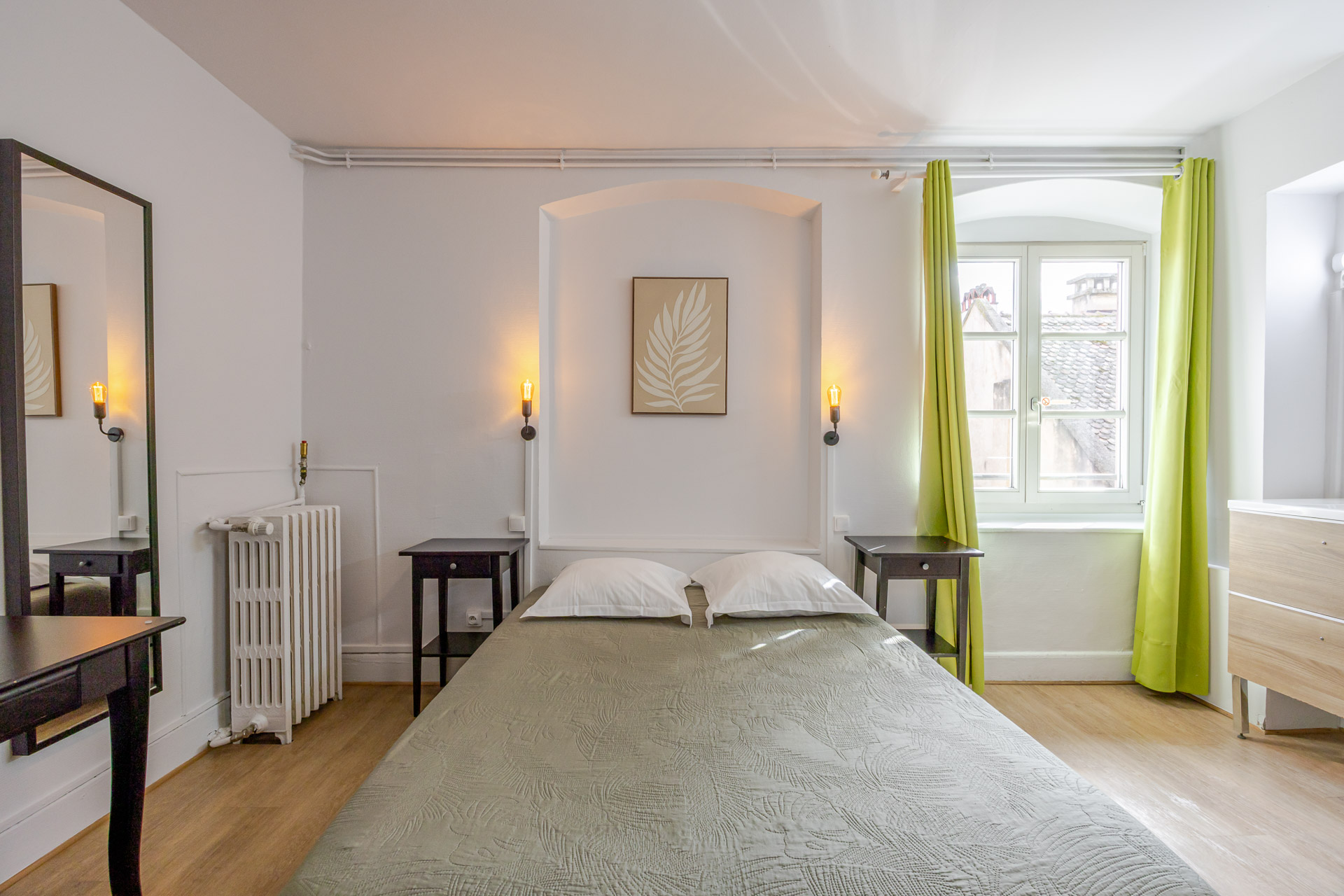
Rennes and Efficient City Accommodation
Rennes provides another useful example of practical hotel planning. Travelers arriving by train may value accommodation that reduces transfer time and simplifies arrival with luggage.
A compact room can be entirely suitable when the traveler is primarily exploring the city. A dedicated desk and natural light may become more valuable for business stays.
The key is to identify the actual purpose of the accommodation before selecting the room category.
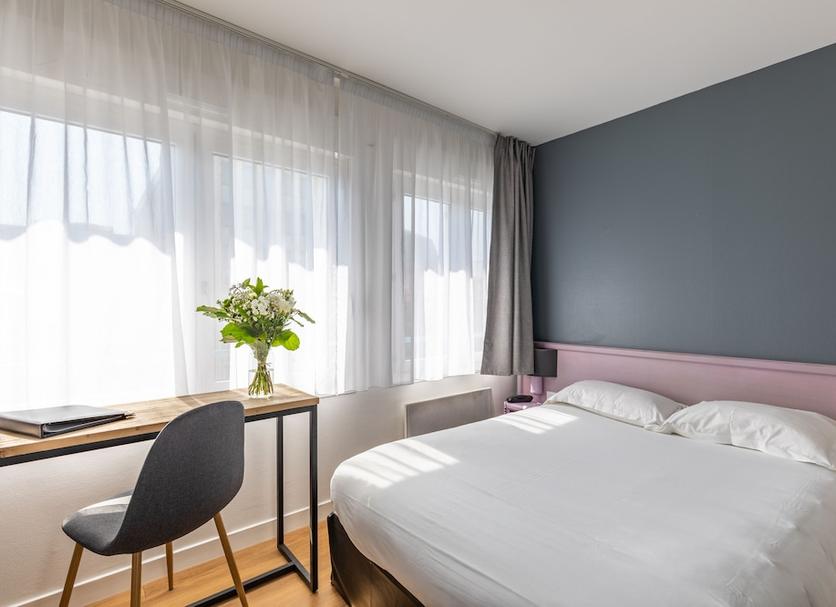
Grenoble and the Importance of Views
Grenoble demonstrates how destination-specific features can influence hotel selection. Travelers may value mountain views, balcony access, transportation connections and easy regional mobility.
A room with a view can create an immediate connection to the destination, but practical factors remain important. Travelers should still check noise, bed comfort, workspace and transportation.
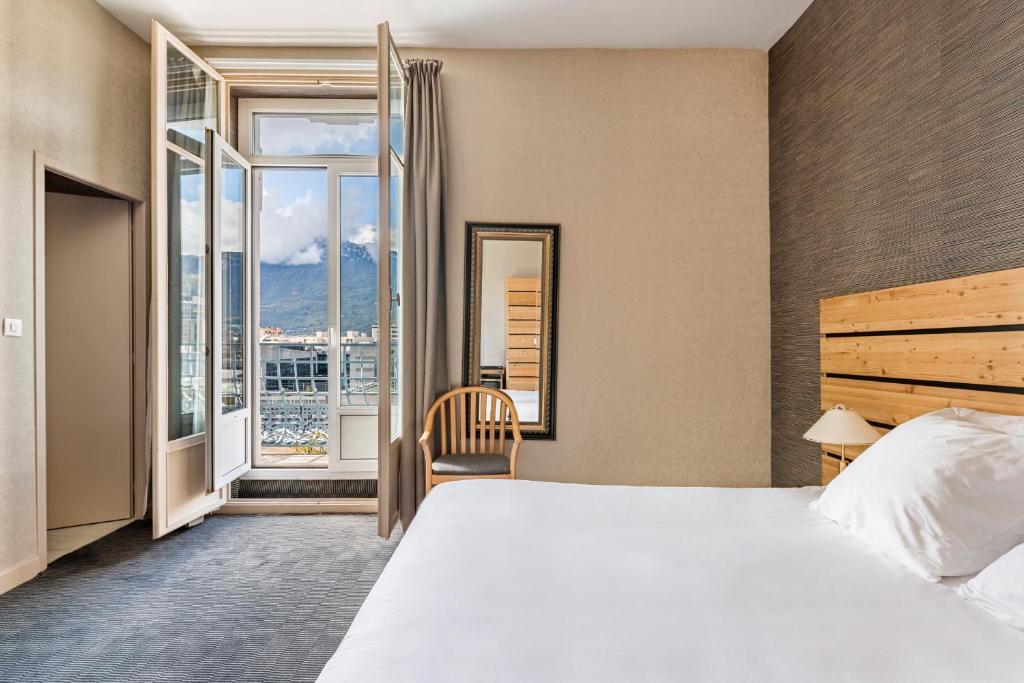
Reims and the Value of Functional Design
Reims offers travelers a combination of historic attractions, cultural exploration and regional travel. Accommodation can range from traditional rooms to contemporary properties and extended-stay formats.
Travelers should evaluate whether they intend to use Reims as a short stop or a longer base. For a short stay, transportation and central access may dominate. For a longer stay, storage, workspace and neighborhood convenience become more significant.

Why Smaller French Cities Can Change the Accommodation Calculation
Major cities often dominate hotel searches, but smaller French destinations can offer a different accommodation experience.
In smaller cities, travelers may have more flexibility to choose between central locations, residential areas and properties with larger rooms.
The transportation calculation can also change. When distances are shorter, a slightly less central hotel may remain practical.
This makes it particularly important to avoid applying one universal hotel formula to every French destination.
Choosing Between a Central Hotel and a Quiet Hotel
Central accommodation maximizes access. Quiet accommodation maximizes rest. The correct balance depends on the itinerary.
Travelers with limited time may prioritize central access because it reduces daily transportation. Travelers staying for a week may prefer a quieter environment that feels more residential.
The ideal solution is sometimes a property on a relatively quiet street that remains close to public transportation and restaurants.
How to Use Hotel Reviews Without Becoming Overwhelmed
Reading hundreds of reviews can create more confusion than clarity. Instead, define five categories before reading: cleanliness, sleep quality, location, service and room accuracy.
Search for repeated patterns within those categories. Ignore isolated comments unless they describe a serious recurring issue.
This method makes review research faster and more objective.
Hotel Selection for Different Travel Paces
Fast itineraries require efficient locations and easy transportation. Slow itineraries create greater value for spacious rooms, outdoor areas and neighborhood quality.
A traveler moving every two nights should prioritize simple check-in, luggage storage and transport. A traveler staying ten nights can prioritize storage, workspace, laundry and a comfortable residential environment.
The Psychology of Hotel Choice
Hotel selection is partly emotional. Travelers often imagine the future trip while looking at photographs.
That emotional connection can be useful because it helps identify the type of experience the traveler wants. However, it should be balanced with practical evaluation.
The goal is not to remove emotion from the decision. The goal is to combine inspiration with evidence.
How to Build a Shortlist
A practical shortlist can contain three to five properties. Each should be evaluated using the same criteria.
Start with location. Then compare room functionality, sleep environment, bathroom, transportation, total cost and the features that matter most for the trip.
Once the shortlist is complete, the final decision usually becomes much easier.
How to Plan a French Hotel Budget
Divide the budget into essential comfort, useful convenience and optional luxury.
Essential comfort includes clean rooms, suitable bedding, functional bathrooms and an appropriate location.
Useful convenience includes breakfast, parking, workspace, laundry and transportation access.
Optional luxury includes upgraded views, larger suites, terraces, spas and premium design.
This framework allows travelers to spend more where it genuinely improves the experience.
Twenty-Five Questions Before Confirming the Stay
- What is the main purpose of the trip?
- Which neighborhood best supports the itinerary?
- How much time will be spent inside the hotel?
- What room category is actually being booked?
- What is the exact bed configuration?
- Is the room layout practical?
- Is there sufficient luggage space?
- How is the room ventilated?
- Is air conditioning available when needed?
- Are there recurring noise complaints?
- Is the bathroom convenient?
- Are power outlets accessible?
- Is there a useful workspace?
- Is breakfast worthwhile?
- Is parking required?
- How easy is the hotel to reach?
- How will luggage be handled before check-in?
- How will luggage be handled after check-out?
- Does the hotel fit the travel pace?
- Will a rental car genuinely improve the itinerary?
- Is airport access practical?
- Are recent reviews consistent with expectations?
- What is the complete cost?
- Which premium features will actually be used?
- Does the hotel make the entire trip easier?
The Best Way to Handle Hotel Upgrades
Upgrades should be treated as tools rather than status symbols. The correct question is what additional experience the upgrade creates.
A larger room may provide meaningful comfort during a long stay. A terrace can matter in a destination where outdoor relaxation is central. A quieter room location can dramatically improve sleep quality.
However, paying more simply for a more decorative room may not create meaningful value.
When a Balcony Is Worth the Additional Cost
A balcony can be one of the most enjoyable hotel features when it matches the travel style.
Morning coffee, evening reading and quiet moments between excursions can make outdoor space valuable.
Travelers should nevertheless check size, privacy, furniture, view and noise. A balcony should be evaluated as a real space rather than as a marketing word.
When a View Is Worth Paying For
A view becomes more valuable when the traveler intends to spend time in the room. Couples on relaxed vacations may appreciate it more than travelers on intensive sightseeing schedules.
The destination itself also matters. A view over an iconic cityscape or coastline may have greater emotional value than an ordinary urban outlook.
Travelers should verify whether the selected room category guarantees the advertised view.
Hotel Planning for Couples, Families and Solo Travelers
Solo travelers often prioritize location, safety, efficient layouts and easy transportation. Couples may prioritize atmosphere, privacy, views and dining access. Families usually prioritize room configuration, storage, bathroom access and neighborhood convenience.
These differences demonstrate why there is no universal definition of the perfect hotel.
Planning for Early Flights
Early departures require a different hotel strategy. The final night should minimize the risk of complicated transportation.
Travelers should calculate realistic airport transfer time, luggage requirements and reception arrangements. Breakfast may not be useful if the departure is extremely early, while reliable transportation becomes more important.
Planning for Late Arrivals
Late arrivals benefit from straightforward transportation and clear check-in procedures.
Travelers should confirm whether reception is available throughout the expected arrival window. If not, they should understand the alternative access procedure before leaving the airport.
Hotel Safety and Organization
Basic organization can make travel safer and easier. Keep passports, identification, tickets and essential documents in one consistent location.
Use the hotel safe when appropriate and avoid leaving valuable equipment unnecessarily exposed.
For families, shared documents can be organized in one travel pouch. For business travelers, important work materials should remain separate from clothing and everyday items.
The Role of the Hotel in a Relaxed Travel Rhythm
A hotel can influence whether a trip feels rushed or relaxed. A convenient property allows travelers to return during the afternoon, rest, change clothes or leave purchases before continuing the day.
This flexibility becomes particularly useful in large cities where travelers may otherwise spend significant time moving between neighborhoods.
How to Avoid Overplanning
Professional travel planning does not mean scheduling every minute. The hotel should make flexibility easier.
Leave open periods for spontaneous restaurants, markets, walks and unexpected discoveries.
A strategically located hotel makes spontaneous decisions more practical because travelers do not need to calculate a long return journey after every activity.
Using the Same Hotel Framework Across France
The same analytical framework can be applied across different destinations even when the final choices are completely different.
Paris may require urban transportation analysis. Nice may emphasize balconies and coastal access. Lyon may reward walkability. Marseille may require stronger regional planning. Strasbourg may place more emphasis on historic buildings and pedestrian access. Grenoble can make views and regional mobility more relevant. Reims can benefit from efficient city access and flexible room formats.
The destination changes, but the questions remain consistent.
A Professional Accommodation Workflow
Begin with the itinerary. Define the purpose. Select the neighborhood. Establish the room requirements. Compare transportation. Build a shortlist. Read recent reviews. Calculate the complete cost. Verify the exact room category. Then make the reservation.
This sequence reduces wasted research and creates a much clearer decision process.
What Makes a Hotel Feel Premium?
Premium comfort is rarely created by one expensive feature. It is usually the result of many small decisions working together.
Good bedding, quiet surroundings, effective lighting, comfortable seating, quality materials, thoughtful storage, easy charging and a practical bathroom can create a premium experience even without extravagant decoration.
The strongest hotels understand that luxury is often the absence of friction.
Why Practical Luxury Matters
Practical luxury means that the traveler does not need to struggle with the room. Luggage has somewhere to go. Lighting works naturally. The bed is comfortable. The bathroom is easy to use. The workspace is practical. Transportation is straightforward.
This kind of luxury becomes increasingly valuable during long trips.
Creating a Better Multi-City Hotel Experience
Travelers moving through several French destinations should allow each hotel to serve a different purpose.
The Paris property can focus on urban efficiency. Nice can emphasize relaxation. Lyon can support food and cultural exploration. Marseille can provide a Mediterranean base. Strasbourg can deliver historic atmosphere. Grenoble can connect the traveler with mountain scenery.
This creates variety while maintaining a consistent standard of comfort.
How to Make Every Hotel Change Easier
Keep essential documents and electronics in one bag. Use packing cubes. Keep toiletries organized. Photograph important travel documents if appropriate. Confirm the next hotel's address and arrival instructions before leaving the current property.
Small organizational habits become extremely valuable when the itinerary includes several hotel changes.
The Importance of Luggage Storage
Luggage storage can make a major difference when check-in and check-out times do not align with transportation.
Before booking, verify whether the hotel provides storage before arrival or after departure. This can allow travelers to explore the city without carrying heavy bags.
Hotel Selection for Long Weekends
Long weekends are short enough that location becomes especially important. Travelers should avoid spending significant portions of the trip commuting.
Choose a neighborhood that supports several activities within walking distance and provides good transportation for everything else.
Room comfort still matters because travelers often return late after full days of exploration.
Hotel Selection for Two-Week Trips
Two-week journeys require a different balance. Storage, laundry, workspace, comfortable seating and neighborhood quality become increasingly important.
Travelers may also benefit from mixing hotel types. A city hotel can support intensive exploration while an apartment-style property can provide a more residential environment during longer stops.
Why the Final Decision Should Feel Simple
If the research process has been organized correctly, the final decision should not require dozens of open tabs.
The shortlist should reveal clear differences. One hotel may have the best location, another the strongest room, another the most convenient transportation, and another the best long-stay functionality.
The traveler can then choose according to the priorities established at the beginning.
The Complete French Hotel Comparison Framework
| Travel Style | Primary Hotel Priorities | Secondary Priorities |
|---|---|---|
| Short city break | Location and transportation | Sleep quality and efficient room layout |
| Romantic trip | Atmosphere, privacy and comfort | Views, balcony and dining access |
| Family holiday | Room configuration and location | Storage, breakfast and elevators |
| Business travel | Workspace and transportation | Quietness and breakfast |
| Road trip | Parking and vehicle access | Storage and departure routes |
| Long stay | Storage and practical facilities | Laundry, workspace and neighborhood |
| Coastal vacation | Outdoor space and location | Views, relaxation and restaurants |
| Multi-city journey | Transportation and check-in efficiency | Luggage storage and room functionality |
Final Accommodation Checklist for France
- Define the purpose of the trip before searching.
- Select the neighborhood based on the actual itinerary.
- Review the exact room category.
- Check bed size and configuration.
- Assess room circulation.
- Confirm storage capacity.
- Review bathroom functionality.
- Investigate recurring noise comments.
- Check natural light and window orientation.
- Confirm workspace if needed.
- Check charging access.
- Review breakfast options.
- Confirm luggage storage.
- Calculate airport transfer requirements.
- Check parking if driving.
- Compare rental car needs with the itinerary.
- Read recent guest reviews.
- Calculate the total cost rather than the headline price.
- Evaluate premium features according to actual use.
- Confirm check-in arrangements.
- Confirm check-out arrangements.
- Prepare a luggage organization system.
- Keep important documents together.
- Choose the property that supports the travel rhythm.
- Review the entire journey once more before final confirmation.
Frequently Asked Questions About Hotels in France
What is the most important factor when choosing a French hotel?
Location is often one of the most influential factors because it affects transportation time and daily convenience. However, the ideal priority depends on the purpose and pace of the trip.
Should I choose a hotel in the city center?
A central hotel can reduce commuting, but it may also be busier or noisier. Travelers should compare central access with neighborhood atmosphere and sleep requirements.
How important is room size?
Room size matters, but layout can be equally important. Efficient circulation, storage and furniture placement can make a smaller room highly functional.
Is a balcony worth paying more for?
It can be valuable when the traveler expects to use it. Check size, privacy, furniture, view, orientation and noise before paying a premium.
Should I rent a car for France?
It depends on the itinerary. Cars can be useful for regional travel, rural areas and multi-destination routes, while major cities can often be easier without one.
Should I rent a car in Paris?
Travelers spending most of their time inside Paris may not need one. Those continuing into regional destinations may find a rental useful after leaving the city.
What should I check before booking a family room?
Confirm the exact beds, room dimensions, bathroom configuration, connecting-room options, elevator access, storage and breakfast arrangements.
How can I find a quieter hotel room?
Look for recurring comments about noise and ask the property about room orientation. Rooms away from elevators, service areas and major streets may sometimes provide a calmer environment.
What should business travelers prioritize?
Reliable connectivity, workspace, quietness, transportation access, comfortable seating and efficient arrival procedures are generally useful priorities.
How should I read hotel reviews?
Look for patterns rather than isolated opinions. Recent reviews and repeated comments about practical issues can provide useful information.
Is hotel breakfast always worth the price?
No. Compare the hotel's breakfast price and schedule with nearby cafés and bakeries. The best choice depends on the itinerary.
What makes a hotel room genuinely comfortable?
Comfort usually comes from a combination of good bedding, suitable temperature, quiet surroundings, practical lighting, useful storage, an effective bathroom and easy circulation.
Should I prioritize design or functionality?
The strongest accommodation combines both. Design creates atmosphere, while functionality determines how enjoyable the room is during everyday use.
What should I consider for a long stay?
Storage, laundry, workspace, seating, neighborhood services and a practical room layout become increasingly important as the number of nights increases.
How can I reduce hotel-related travel stress?
Plan arrival routes, confirm check-in, organize luggage, verify transportation and choose accommodation that naturally supports the itinerary.
Should I choose the most luxurious hotel available?
Luxury should be evaluated according to actual use. A traveler may receive greater practical value from location, sleep quality and transportation than from expensive features that are rarely used.
How many hotels should I compare?
A shortlist of three to five realistic options is usually easier to evaluate than dozens of properties with minor differences.
What is the best approach to a multi-city France itinerary?
Use consistent core criteria for every destination while allowing local priorities to change. Transportation may dominate in Paris, while outdoor space or regional mobility may matter more elsewhere.
The Professional French Accommodation Philosophy
The strongest hotel decisions are based on alignment. The hotel location should align with the itinerary. The room should align with the length of the stay. Transportation should align with the destinations. Amenities should align with actual habits. The budget should align with the value received.
France provides an unusually rich environment for this approach because every region can create a different accommodation experience. Paris rewards strategic neighborhood selection. Nice highlights the relationship between city life and the Mediterranean. Lyon combines urban exploration with culinary and cultural experiences. Marseille introduces waterfront living and regional mobility. Strasbourg adds historic atmosphere. Reims and Grenoble demonstrate how smaller destinations can change the hotel calculation.
The traveler does not need to use the same hotel style everywhere. In fact, variety can improve the journey. What should remain consistent is the underlying standard: comfortable sleep, practical rooms, suitable locations, reliable transportation and a clear understanding of total cost.
The most useful hotel is not necessarily the one with the largest room, the longest amenity list or the most dramatic photographs. It is the one that quietly removes obstacles from the journey.
Making the Hotel Part of the Destination
A thoughtfully chosen hotel can become part of the travel experience rather than simply a place to sleep.
Historic architecture can reinforce a cultural itinerary. A coastal balcony can strengthen a relaxed Mediterranean holiday. A quiet city room can provide a peaceful base after a long day. A well-connected urban property can allow travelers to change plans spontaneously.
This is why hotel selection deserves the same level of attention as transportation and sightseeing.
The Final Strategic Test
Before confirming any accommodation, ask one final question: Will this hotel make the entire trip easier?
If the answer is yes, examine why. Perhaps it saves transportation time. Perhaps it provides the right room configuration. Perhaps it offers the quiet environment required for sleep. Perhaps it has practical parking. Perhaps it provides the outdoor space that makes the destination feel special.
If the answer is unclear, return to the original priorities and compare the property with the shortlist again.
This final test prevents travelers from becoming distracted by isolated features.
The complete French stay strategy: choose accommodation according to the journey rather than choosing the journey around the accommodation. Define the purpose of the trip, select the right neighborhood, verify the room, evaluate sleep quality, understand transportation, calculate total cost, and only then consider premium extras. When these elements work together, the hotel becomes more than a booking. It becomes the practical foundation that allows the entire French travel experience to feel comfortable, organized and effortless.
Comments
Post a Comment